
Layne's Guide to Lifting

Why does the Dissident Right hate athletics?
The online Dissident Right is a place that might be described, in a word, as “muscular": crops of aggressive, young minds in dialectic— often in competition with one another. You can feel the visceral heat radiating off intra-DR battlefields like the Pagan vs. Catholic Twerkoff, Groypers vs. anti-Groypers, Bl-ack! pill vs. White Pill, Ortholarp vs Cathlarp, and definitely the niche tribal warfare that you expected to be mentioned!

Stitched together across a dozen platforms and many thousands of voices is a sort of No Man’s Land of testosterone-laden essays, screeds, manifestos, diatribes, and text walls. Men confronting ideas, systems, theories, each other, dosed with unnecessary primal aggression that can only come from the pseudo anonymity of internet debate. It’s one of the only places on the internet where someone will meaningfully engage your viewpoint on obscurities like the “Fourth Lateran Council” before calling you a nigger. There’s a freedom in that, something like Jester’s Privilege being used on something other than organized religion. How magical, how muscular!
So.. why does it feel like nobody in this world exercises?
Of course, there are the visible outliers. But on the whole, guys in this realm rarely work out. Most are quite ready to acknowledge this, actually. Consider that our adopted caricature, the Chud, is a skinnyfat and myopic little guy that sits with his arms crossed on the perimeter of civilized society. He vainly shakes his fist at Chad and Stacy, cursing his lowborn genetics for not gifting him the body that Chad goes to the gym to maintain daily while Chud orders DoorDash and plays modded Hearts of Iron IV alone in his bedroom with 1.25x Youtube Premium on a second monitor.
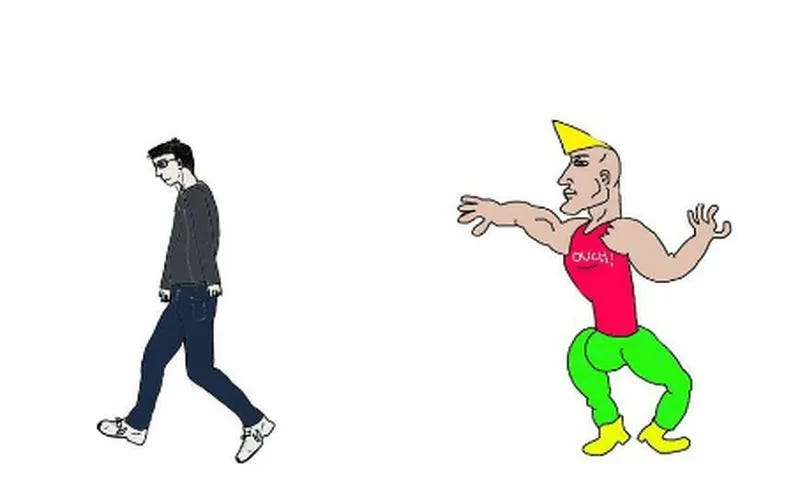
Yes, I really hate the anti-Athletics and anti-Sports factions within the Dissident Right. It truly irritates me to see the uncoordinated, un-athletic Chuds take victory laps on “sportsball” knowing they are entirely feckless, nigh castrated, once the screen is removed. For all their (rightful) hatred of the pencil-necked bureaucrat class, Chuds everywhere snidely retort that not only viewing sports is pointless, but playing them is too. When I hear critique leveled at NBA / NFL athletes by destitute computer science majors with anime pfps, it’s impossible to not cringe.
Note: If I’m describing you, you can never say WAGTFKY again. You can’t envision yourself donning a stalhelm in defense of your beloved fatherland from the Asiatic hordes, or even working to round up illegals for ICE. You’re exporting the responsibility to enforce your beliefs on someone else; the guys that do cool stuff are all physically fit. You can’t march into battle against the assembled evils of the modern world if your unconditioned body is wheezing under the weight of your rifle and pack. You really shouldn’t even identify with physically fit Right wing-coded characters like Aragorn or Conan the Barbarian. You get Lester from GTA V.
I will not recant: the anti-athletics and anti-sports crowd are, irredeemably, completely foreign to the trve Right Wing. I completely understand the hesitancy towards watching sports as a “goycattle bread and circus distraction” (disagree unless taken to excess btw), but criticizing merely engaging in physical activity puts you in libtard territory whether you like it or not. And, truth be told, it is always the un-athletic who critique the playing of sports. Without fail, there is envy and self-loathing gurgling under the surface of the bitterly impassioned anti-sports chud’s mien. I’m not saying you have to be jacked, I’m saying you can’t see the gym and sports as “distractions”. Especially if they’re “distracting” you from Tarkov and Xitter arguments.
Why Should You Exercise?
The best athletes are able to tie their work to something meaningful, as I alluded for the intro. While..erm… primates typically undergo their routine in service of their ability to fight or get bitches, you can do better than that. There should be a serious, thorough philosophy behind why you lift. It is the foundation for discipline.
Allow me to let you in on a secret: 99% of people don’t like to exercise. Even the ones you see blasting all over Instagram about how they’re in the gym every day. It’s okay to admit it: The feeling of straining under a heavy weight, veins bulging and breath sputtering, is not particularly pleasant. I’d rather be at home, posted up in the recliner, tapping away on Shartstack while my atmospheric dungeon synth playlist makes me feel like I’m a erudite and esoteric scholar. It’s also okay to admit that “motivating” yourself into wanting to exercise through positive and negative self-debate is rarely successful. You can’t read enough Sigmallionaire Grindset posts that will intimidate or enthuse you to work out on a regular basis.
What you need is the reliable but hardly forthcoming Discipline, which only comes after you’ve established a habit. Willpower is an expendable resource that is easy to exhaust and difficult to recover, think of the classic marshmallow experiment. Forcing yourself through the threshold of the Iron Temple before attempting to will yourself into a good session is a great way to cause burnout, rubber banding, and injury. Instead, try forming a healthy habit with attainable, incremental goals. You can begin establishing a habit by anchoring the intended behavior in a solid philosophy. It’s okay to start slow.
As the prolific David Goggins puts it (Yes I like David Goggins), you need “cookies in the cookie jar” available in moments of weakness that will reinforce your accrued discipline. Consider them little shots of willpower that, when used appropriately, can propel you to greater heights. These cookies are typically a mix of personal and academic, and form the basis of your athletic philosophy. Ultimately, establishing it is a wholly individual affair that I can’t spoonfeed you. For example, you might be motivated by the time kids made fun of you for being fat in middle school. Don’t fight that, if it works. Or, like me, you respond to the more clinical reasons to exercise. Here are some of my cookies:
I want to be able to protect myself and my loved ones
I want to be a strong and reliable force for good in my life
I want to look good
Someone who hates everything about me exercised today
I know once I get started, I’ll be glad I did
I know the moment it’s over, I’ll be glad I did it
I’ll sleep better tonight
I’ll be more confident
Exercise lowers my chances of disease
Exercise leaves me in a better mood
I will age better
I’ll be desirable to
womenmy new wifeMen will respect me more, even subconsciously
I’ll look like I take care of myself
I have a mandate from God to treat my body as a holy temple
I want to capture my athletic prime before its gone forever
I want to attain my maximum potential
I know I can start slow if that’s what I need today
I want my parents and friends to be proud
As you can see, most of mine aren’t explicitly personal. I don’t have a villain origin story where I was mocked for my appearance or sumn. A guy like David Goggins basically just pulls from a menagerie of childhood traumas, which I suppose also works. Work with what you have, I guess.
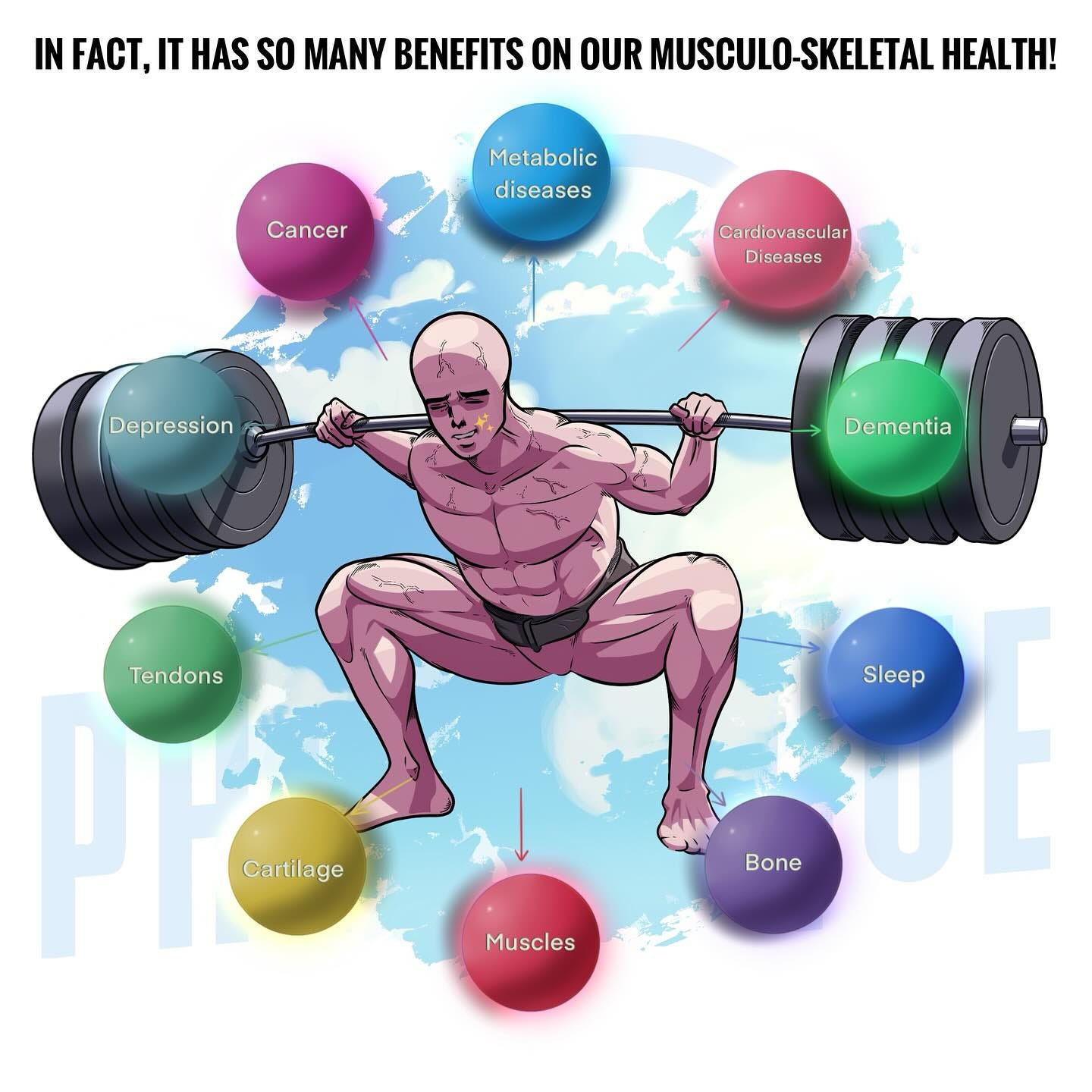
Don’t underestimate the power of exercise to heal and transform your body. Exercising, specifically resistance training, is one of the healthiest things you can do— ever. It does everything from lowering your rates of certain cancers (unironically, look it up), to staving off dementia, to curing depression, to reversing bone demineralization. It acts as a shield that protects you from other poor lifestyle choices: smoking, drinking, lack of sleep, soda, Big Macs, steroids, whatever your vice is.
I’m not saying you should indulge those things, but I am saying you have a better chance of mitigating the negative consequences with exercise.
Why Should You Listen to Me?
Perhaps my most valid credential is that I’ve been an athlete since a young age. I’ve played nearly every ball sport found in the US in some league or another (and several non-ball sports) with the proud exception of soccer, I’ve been lifting weights seriously for 12-ish years, and I even eked out a 4 year career playing D2 Rugby at an internationally respected program. Don’t get the idea that I’m a freak athlete, because I’m not. Instead, I was blessed with strong Northwestern European genetics (and work ethic) that propelled me to become a parochially successful athlete that just stuck with it for a long time. I’m qualified to brag about “back in the day” on a few fields, but I’m never going to have my jersey retired or something. Every county in America has produced a few of me every couple years for the last century. The golden era of American sports was full of gifted but regular guys like me.
I have kept up with athletics in different ways as I’ve aged out of most organized sports leagues. For one, I’m a certified Tactical Strength and Conditioning Facilitator, meaning I was handed a printed out .pdf saying I’m qualified to construct training and nutrition programs for military, police, firemen, and other “tactical” athletes (“tactical” simply meaning performing in a non-controlled environment instead of playing a sport on a field). I got this credential because I couldn’t find a decent job after college, and ended up parlaying it into a brief “career” as a Strength and Conditioning coach for a small D1 Football program. Exciting! More importantly, I’ve also hit some impressive athletic milestones. Here are some of my best over the years:
415x8 Squat
415x10 Deadlift
315x5 Bench
225x20 Bench (!)
sub 90 minute 10-miler
21 minute 5k
100 “to standard” pushups without stopping
2:15 12 mile ruck march (!)
3rd Grade Presidential Fitness Test demon 😈
You might have better lifts (you definitely have better runs), but I hope I’m painting the picture of a seasoned and semi-formally educated athlete who is qualified to speak about exercise.
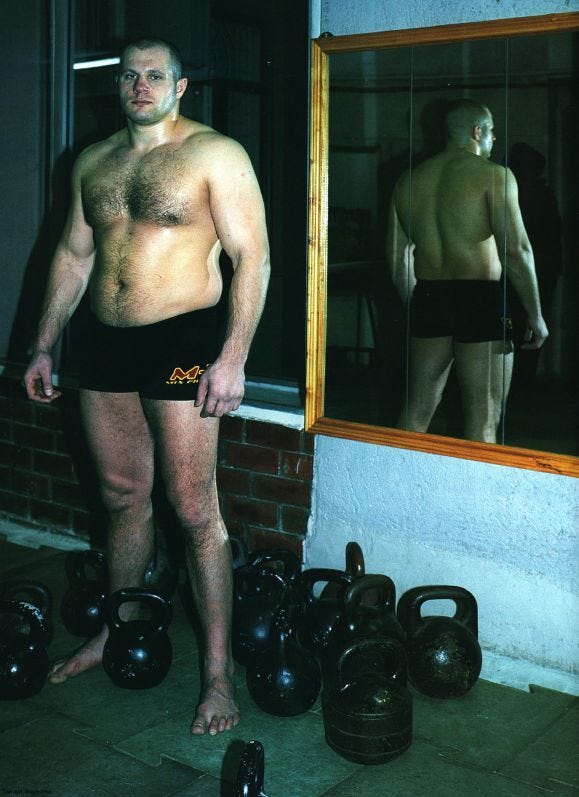
Also, like I said in Layne’s Guide to Guns, I have zero profit incentive from writing this guide. Trust me as someone who’s orbited the “Fitness Industry” for a while, most guys will try to leach $50-150 off of you for a .pdf of what I’m about to share for free. I don’t need a pat on the back, I enjoy writing, but the lack of ulterior motives should lend more credibility for my advice in your mind.
Exercise 101: the Athletic Performance Triad
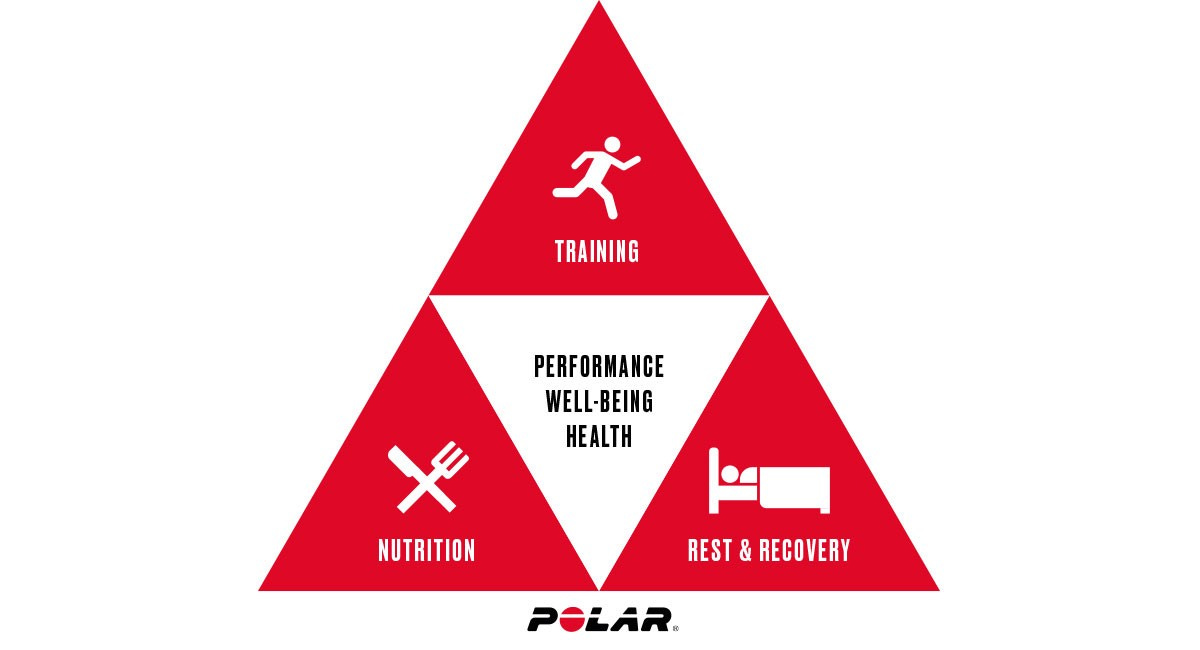
To athletically perform at full potential, you must adhere to the laws of the “Athletic Performance Triad”. There’s three elements: Exercise, Nutrition, and Recovery. As the timeless wisdom goes, the workout starts the night before by properly fueling your body. Then you do the workout, and it continues with proper recovery procedure before the process begins anew. This article will only cover training, but I’ll make one on nutrition and recovery if you guys want.
Resistance Training
This genre is called resistance training because the act of lifting involves forcing a contraction of the muscle to overcome a specific amount of resistance. When you curl a 10 pound dumbbell, you’re forcing the bicep to generate >10 pounds of force necessary to overcome the combined mass and gravity of the object. This feat is accomplished by a relatively complex anatomical process involving more of your body than you’d think. It begins with your brain sending electrical signals to the targeted part of the body. There, so-called “motor unit” nerves send impulses to the muscles, “recruiting” them to start pulling or pushing.
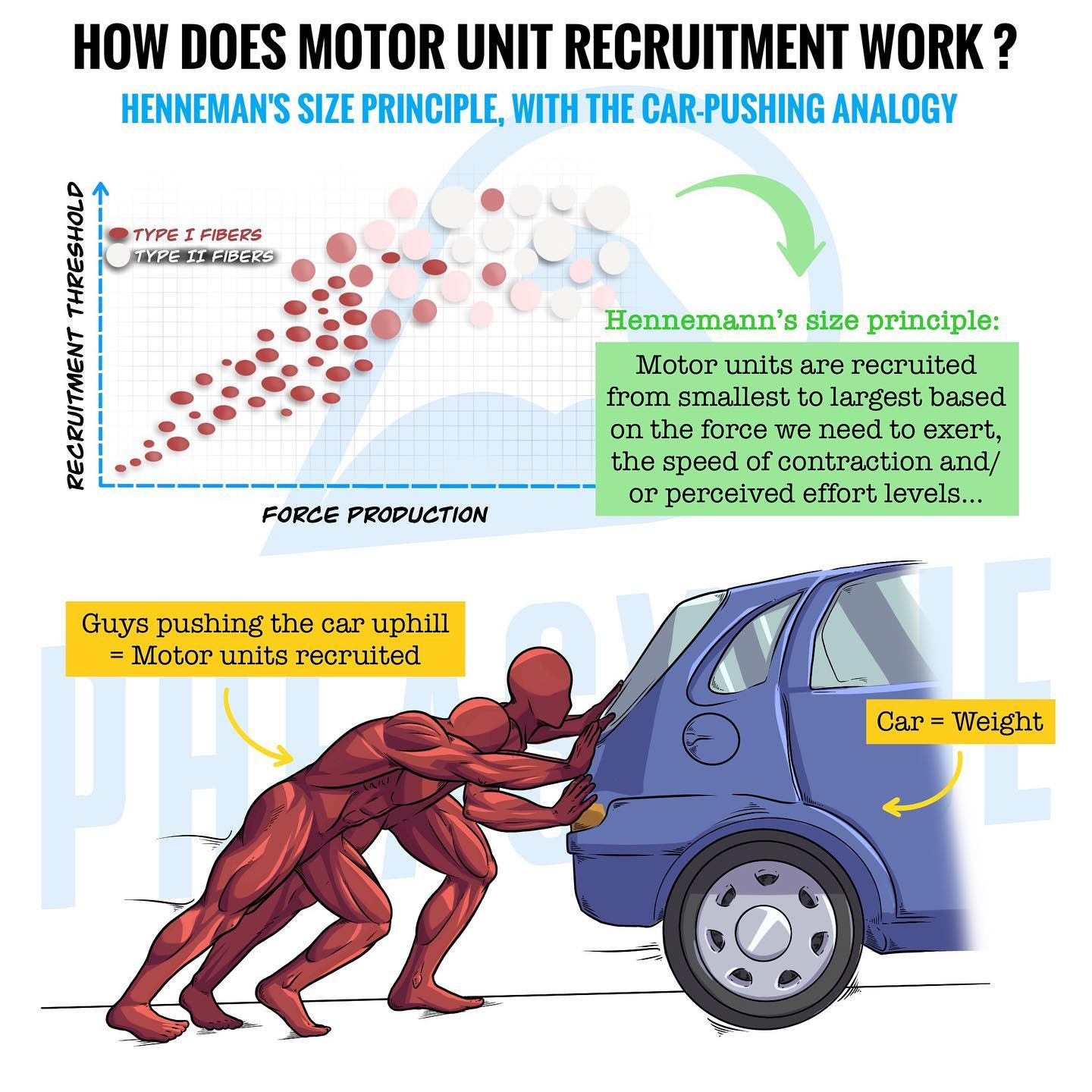
When you consistently undergo resistance training, your body actually improves at the recruitment step of the process. You are able to recruit more more muscle fibers and contract them more efficiently, thus becoming “stronger” despite not adding any additional muscle mass. This is why you can lift more weight on a near weekly basis for the first three months or so of consistent training; your body approaches capturing 100% of its total available strength instead of the perhaps 30-50% before you started training. You can’t, and don’t need to, increase your overall muscle mass at this stage. Rather, you need to better capture and leverage what you already have. Eventually, your body will grow muscles (a process known as hypertrophy) in response to resistances consistently greater than the current muscle fibers and motor units can handle.
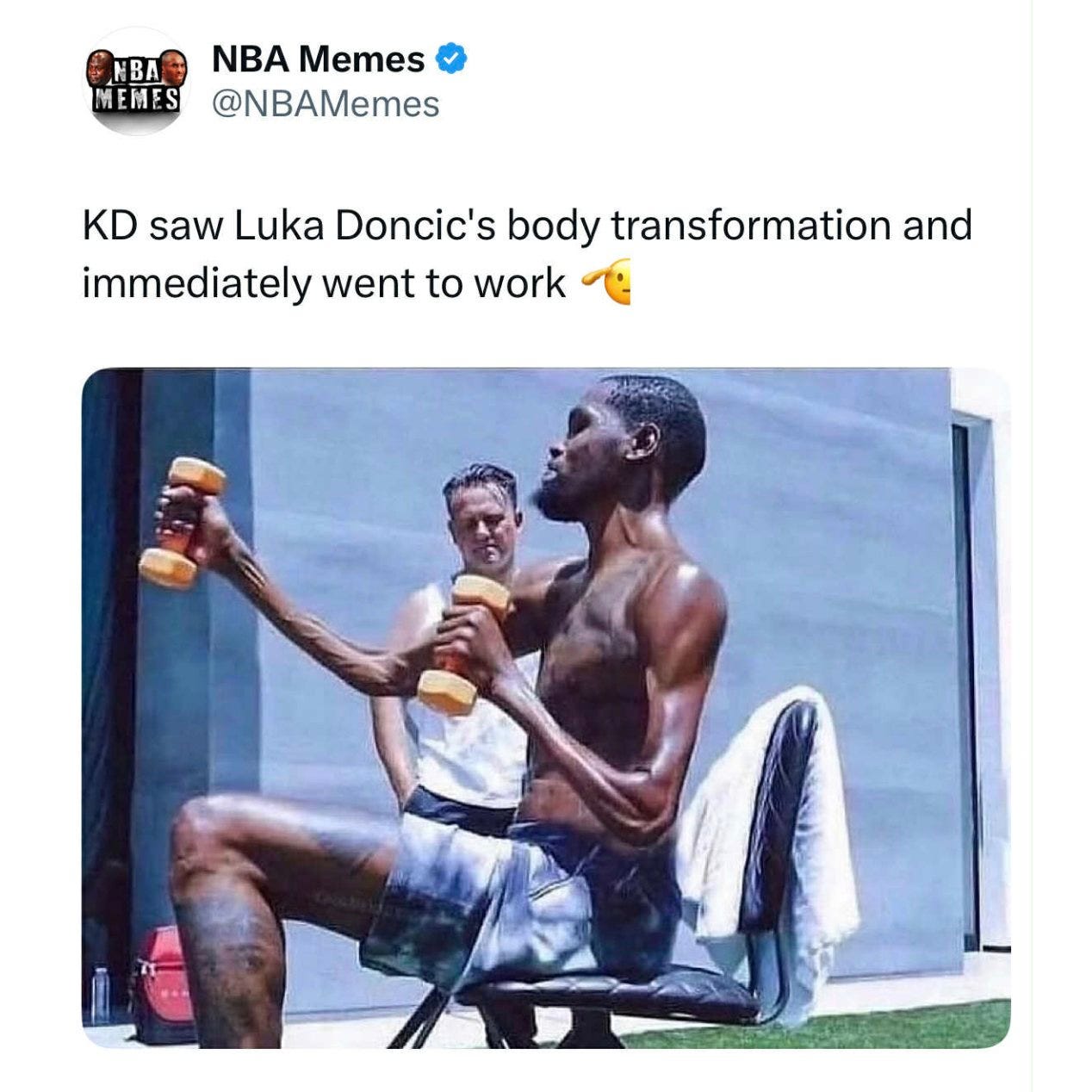
One important detail here is that you actually have different types of muscle.
Type 1 fibers are the explosive and quick-reacting muscle strands you might’ve heard referred to as “Fast twitch”. Think jumping, sprinting, burst lifting, and other activities that require immediate and intense output. Type 2 fibers (aka “slow twitch”) are the inverse: denser, slower, stronger, harder to fatigue and harder to recover when fatigued. Think heavy weight lifting and slow but steady cardio. There is actually a very interesting genetic component that determines the amount of each you can acquire through training (more on that later).
You can increase the amount, density, and efficiency of each type by conducting regular (“regular” in sports soy-ence jargon is pedantically called periodized) resistance training. You can speed up results by knowing the rules your body follows in this environment, although inefficient progress is still obviously better than no progress at all.
Your body is quite smart, and will “budget” available energy and non-fatigued muscles to conduct lifts using as few muscles as necessary to preserve your overall athletic ability in the face of more potential demands. This is a great tactic for survival in the Ice Age, but is basically a hinderance in today’s weight room, where you want to meaningfully train all targeted muscle fibers over the course of a training session. There is a single way to achieve this, and it’s so important that I’m gonna put it in the giant heading font despite being in the middle of a paragraph:
Lift to failure.
I don’t care what else you do. I don’t care how many reps. I don’t care what exercises you perform. I don’t care if you take a 10 minute rest between sets and reps. Yes, all of these factors contribute to overall weightlifting performance, but they pale in the face of this irrefutable law of resistance training: you are hindering your growth potential if you do not lift to failure. Growth happens when your muscles are completely exerted. Not one rep left, not “tired”, so exhausted that you can’t even crank out one more rep with lighter weight. Let all those with muscles to contract hear my words!
Understand that you will reach failure quite quickly in the beginning as your body is simply not accustomed to that level of demand— particularly if you are “untrained” (a childhood without sports, for example). That’s fine, don’t worry about it. As you start your journey, the first thing that will tire is actually your Central Nervous System (CNS), where the aforementioned motor recruitment nerves live. You can tell when your CNS is exhausted by the way it struggles in other “normal” functions of homeostasis: your body starts shaking, even trivially light lifts become cartoonishly hard, you start breathing harder, you’re all sweaty in an air conditioned gym, you can’t write your name without deploying the serial killer ransom note font, you might even feel suddenly sleepy. If you’re untrained, your CNS will tire before your muscles are truly exhausted unless you’re a genetic freak, or perhaps work in a hard labor trade. This feeling of depletion is good, it’s actually great for you. That moment of extreme fatigue is where those improvements in motor unit recruitment occur, amongst a morbillion other health benefits. Every moment you spend in this phase of the workout makes you tangibly healthier. When you hit this point, relish it. Savor it. Take a moment to reflect on all the ways your body is improving, then push harder.
However, don’t feel embarrassed or “weak” because it only takes you 15 minutes to get to this point or whatever. When you can only do a single pushup without pathetically splatting on the floor, it’s not because you’re intrinsically “weak”, its because you’re asking your CNS to quickly recruit and work massive muscle chains all at once when it’s never done that before.

This goes away. Over time, your CNS will improve and it will be your muscles that tire first. Consider this a great achievement that few people ever accomplish; it is the sign of a mature and well-trained lifter. You can tell when you’ve reached this point when you don’t “feel” like you can do another rep despite the weight refusing to budge. When you can’t even unrack a light weight to perform another set, you’ve lifted to failure. Congrats!
Lifting Principles for Noobs
I am really hesitant to give a concrete training plan for noobs because it invites Pseuds to rage about how I’m not using their esoteric lift strategy that got them jacked in 3 weeks. Exercise science is still a nascent field full of retards that want to act like they’re the smartest guy in the room. In fact, some of them even churn out India-tier PhDs so they can export critical thinking to an argument from authority. Also, most people burn out on basically any program they give you and will then incorrectly assume it was the program’s fault they stopped going to the gym 2 months in.
Instead of just telling you what to do, I like to establish some basic principles so you can develop your own program. As with other things in life, the best gym programs are tailored to your individual circumstances. Stock programs are fine, more than fine at first, but are ultimately unable to accommodate your specific situation. Instead, I’m going to lay down the foundation of what a solid program looks like, and you can do whatever you want with it. At the end, I’ll give you an “80% solution” program that will at least get you moving in the right direction. Here we go:
Machines are good, free weight exercises are better: “Machines” are exactly that, a type of resistance offered by weights pulled by cables. They’re a somewhat new innovation compared to the venerable “barbell”, the stainless steel freestanding bar used in free weight lifts.
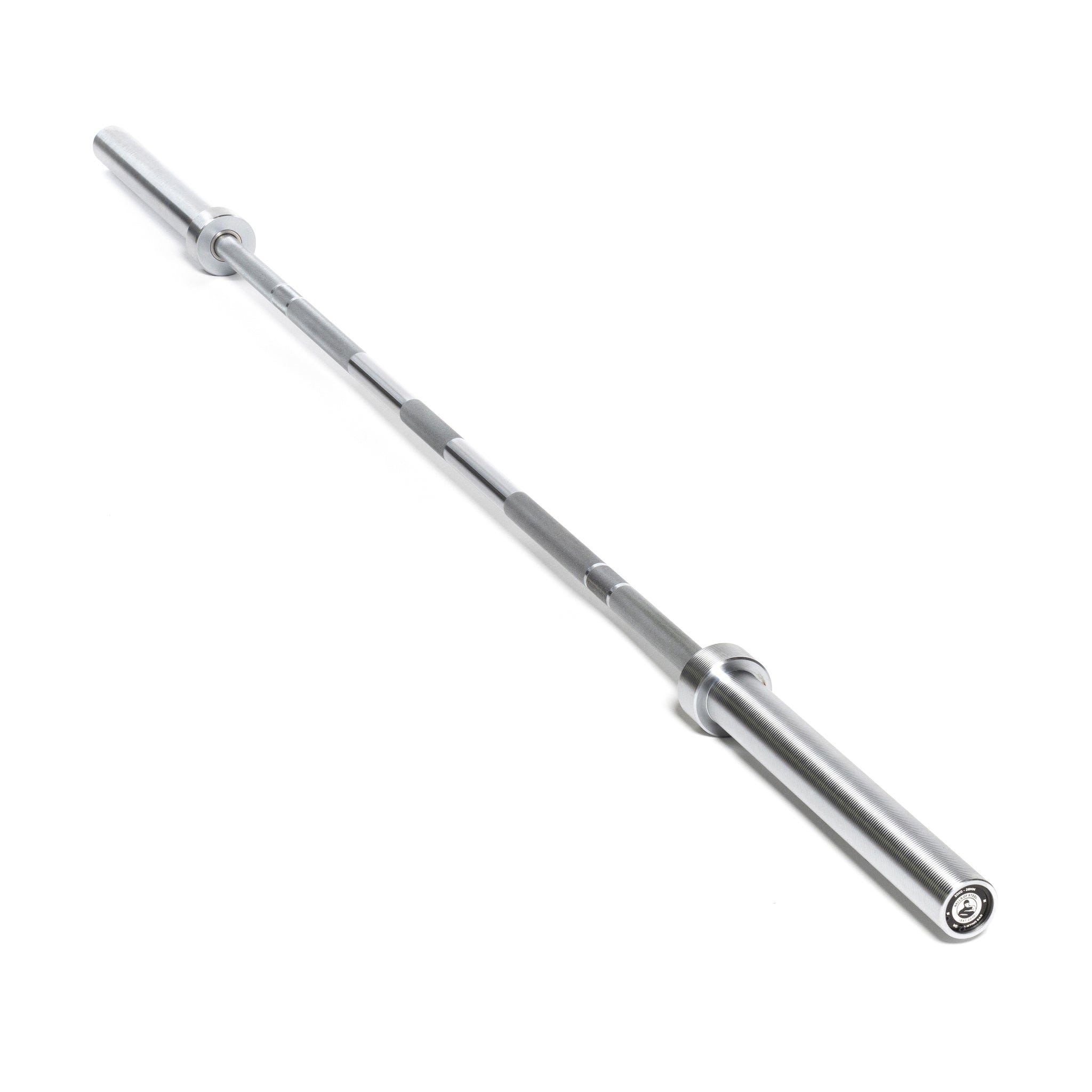
Machines are a fabulous litmus test to expose who got their mail-order CrossShit exercise lobotomy. Seriously, the easiest way to tell if someone is not worth listening to about exercise is if they take a harsh stance on machines. Aggressive Type A guys in their 20s will tell you that machines are useless because they aren’t “compound lifts” (lifts that involve multiple muscle groups), which is ironically one of their strengths. On the other hand, oldheads will try to shill them as the singular weightlifting solution on grounds that “free weights are bad for your joints”. Both of these stances are irredeemably stupid. The reality is, machines are an imperfect format for resistance training that do have a few niche benefits over free weights.
The greatest advantage is that they’re safe to use by yourself, as even experienced lifters need spotters on free weights. Because they’re intrinsically pretty safe (save for user error), you can push yourself really hard on machines without worrying about heavy weights crashing down on top of you if you hit failure or mess up the form while fatigued. Machines are also optimal for targeting small muscle groups that tire at different rates. For example, if you feel like you couldn’t bench another rep but your triceps still have some gas in the tank, machines provide a better avenue for further tricep work than free weights can offer (because you’re not required to steady and move the weight with anything but your triceps). In other words, you don’t need your biceps to perform a tricep exercise on machines. As a result, machines can provide some absolutely sinister lifts to failure that provide excellent muscle definition and size.
However, it must be said: machines are not a substitute for free weights. There are many, many advantages to using free weights over machines that are unfortunately outside the scope of this primer. I like to imagine the dichotomy like the bread and icing of a cake. The base layer of the cake (free weights) allows the icing (machines) to really shine and elevate the whole experience through contrast, but you wouldn’t just eat a bowl of icing witcho big back ahh. You might also like the ruler analogy: machines are like drawing with a ruler and free weights are like drawing freehand. They’re both good, but a trve artist doesn’t rely on a ruler to draw a straight line. Use both free weights and machines, ideally in that order. Don’t forget: Machines at the end of a tough workout can be murderously difficult and supremely rewarding for muscle growth because you can push closer to failure on a given muscle group.
Form > Weight: Ultimately, the weight on the bar is the least important element of a good lift— at least until you’re a seasoned lifter. The goal of a gym session to reach total muscle failure on a targeted group. In theory, you can do this by spamming a 1 pound lift a billion times. That’s certainly not a good setup, but I’d infinitely prefer you try that over an “ego lift” where you yank the weight around because you want to say you can squat 315. Remember, you have the rest of your life to get stronger; you don’t need to rush the process. It is crucial that you develop solid fundamentals before trying to lift heavy. You will never regret going slow, keeping the weight light, and ironing out good form. Good form will serve you the rest of your life, even on tasks like picking something off the ground or carrying groceries. On the other hand: bad form charges extortionate interest, and will bleed over into daily life as you age. It’s just not worth it.
The number of Sets and the Rep range are not very important: Yes, intermediate liftoids, we’ve all seen this chart:
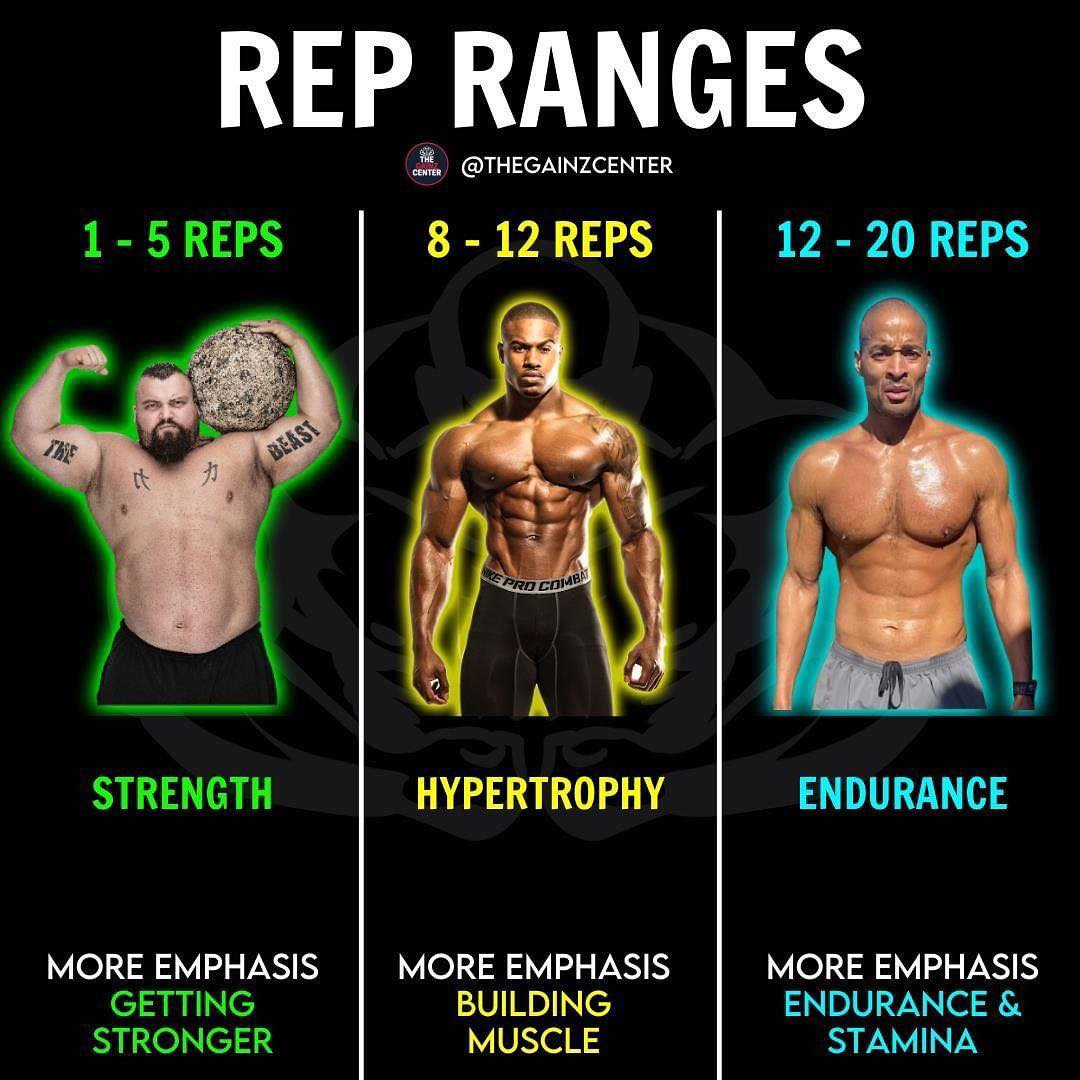
If you couldn’t tell from the broken English, this information is mostly obsolete— as is often the case in the ouroborous-like world of exercise science. In real life, your Perceived Rate of Exertion (PRE, a mental gauge of intensity on a scale of 1-10) is far more important than the number of reps. Lifting in the 0-3PRE range is good for endurance, lifting in the 4-7PRE band is good for overall strength, and lifting in the 7PRE+ range has the largest hypertrophic (muscle growth) effect. In other words, it’s about how close to failure you can get and not about the arbitrary rep range. You cannot avoid this rule. As the prolific Mike Mentzer said (paraphrased):
“If 5 sets are so good, why not do 6? If 6 sets are better than 5, why not do 7? If 7 sets are better than 6 , why not do 100? What is the point?”
The point, of course, is muscle failure. Muscle failure is achieved by hitting a high PRE, not a randomly generated amount of sets and reps.
The rep ranges do play a role, but only when your PRE is greater than, like, 6. My advice is to pick a weight where about 8 reps is quite difficult (8+PRE), but to continue the set if you can safely do more. If you’re consistently exceeding 8 reps, it’s time to go up in weight. Everyone is different, but that scheme has packed lots of lean muscle mass on my frame in short time. You’ll find pushing yourself to achieve 1-2 more reps at severe exertion under heavy weight is quite the “endurance” workout in and of itself, regardless of the rep range.
Simpler, shorter workouts are better: Sometimes you’ll meet a guy that wants to do a dozen different exercises all bundled into something called a “push day”. His idea is that the more specific and complex the workout is, the more scientific he must be. Well, I hate to burst that guy’s gym hymen, but most people never progress to the point where ultra specialized workouts are beneficial. The “Big 3” of free weight lifting (squat, bench, deadlift) should be staples of your routine no matter how advanced you become. If you do it right, you shouldn’t need a ridiculous Arnold-style onslaught of twenty different stations in order to hit failure. Just put more weight on the bar. Free weights are infinitely scalable, at least for us mortals who don’t have to worry about running out of room on the bar, and you can progress for a long time just doing them.
When you design a program, pick a maximum of five unique exercises to do that day.
Ultimately, I think even a “Google Images tier” workout plan is decent enough to get you moving so long as you (safely) lift to failure. As you foray into weight lifting, someone will always try to push another plan on you— typically with salesman jargon and science buzzword blasting about progress they’re making on such and such program. Unfortunately, I have a number of friends that are always oscillating between 2-3 plans and thus stagnating. Meanwhile, I iterate seldomly on my “caveman tier” lifts that have always served me well.
Negatives and isometric holds are severely underrated: Bring it in nephew, some more vocab is necessary to understand the gemmies I’m about to drop. “Negatives” are a rep performed in reverse, or like a mirror of the usual form, typically for extended periods. For example, you might help yourself up to the top of a pushup rep before lowering yourself down slowly (typically 5-7 seconds, although more is always better) if you can’t do a regular push up. The same goes for isometric holds, where you just hold a position under resistance for as long as possible. For example, hanging at the top of a pullup rep as long as you can.
This style of exercise is terrific for muscle growth and extremely underrated in today’s world of neurotically-specialized programming. For one, they nuke your CNS from orbit regardless of the weight. They’re also fantastic at improving the specific movement you’re working on. As in, negative pull ups are the single best way to train pull ups if you can’t do a pull up yet. If your goal is to perform a pullup, I’d rather you do negatives or assisted pullups than a trillion “accessory lifts” designed to isolate the muscles that combine in the pull up. Believe it or not, there are people that disagree with this logic. Indeed, in the ridiculous world of exercise science, “doing a thing makes you better at doing that thing” can be a very controversial statement. Stumble into the wrong parts of the internet and you’ll find jackasses telling you the best way to improve a lift is by working a trillion nano reps on microscopic muscles.
In real life, negatives and holds first entered mainstream use a long time ago, in the proto-body building era of the early 1900s. Guys used them because they worked, they’re accessible, and because they didn’t have much equipment. In that era, lifting equipment was confined to crude dumbbells and bodyweight exercises. So, the strongest men of the age had to use what they had, which were often just torturous isometric holds, spamming negatives to failure, bodyweight reps, and inventive uses of giant dumbbells As you can tell from this photo of George Hackenshmidt, inventor of the bench press born in the 1870s, it clearly worked:
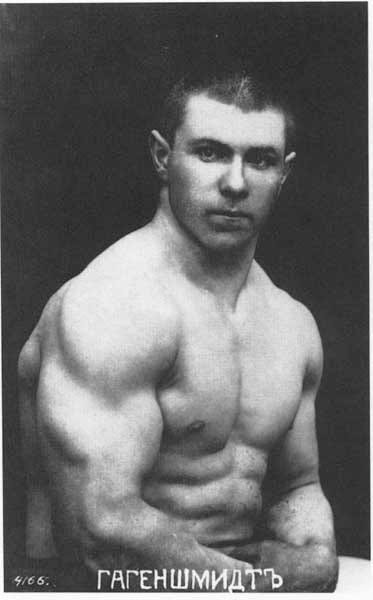
This guy got that jacked in a world before steroids even existed. He did a lot of negatives and iso holds, and precisely zero “push days” or supplements. Weirdly, he became a vegan after he retired.
Full Range of Motion and Strict Form are Important: You actually get a deep stretch when you move your limbs through their entire range of motion, even if it doesn’t feel like you stretched. It’s really good for your muscles and joints when done correctly, and helps to maintain flexibility as you get older. The stereotype of guys not being able to bend their elbows to open doors comes from the era of weightlifting where they did “quarter reps” or only worked “peak contraction” of the muscle, strategies that are now obsolete. Intentional stretching under light resistance is actually the new fad in exercise science, which we will discuss in the recovery portion. The point is, you want to ensure you’re going through the entire range of motion of a given exercise— with a few exceptions. I suppose locking out on the leg sled is an ez way to start Joe Swansonmaxxing.
Go slow, increase time under tension: I often see noobs try to fly through workouts, typically spamming reps to “get it in before they get tired”. This is so strange to me. Your muscles benefit from a principle called “Time Under Tension” (TUT). They only have a chance to tear (and thus grow) when being used to overcome resistance, so you can increase the TUT by lifting at a reasonable pace. Not a snail pace, I find “pause reps” to be silly, but just your regular and natural rhythm. You can increase TUT further by 1) deliberately lifting slower 2) doing more reps 3) using more weight to naturally slow down. Guess which one I recommend.
Cardio and Lifting: I sincerely do not understand the point of mixing aerobic and anaerobic exercise. I really hate it. While I do run after I lift (no, that doesn’t “kill gains” despite what /fit/ folklore from 2012 claims), I never attempt to do both at the same time. This counts for everything from running with weights strapped to your body to timed AMRAP lifting exercises. It’s all so stupid and pointless. If you’re a noob, just keep these separate. If you also hate this strategy, you’ll enjoy my hate rant on Crossfit towards the bottom. Preview in this image caption!
One Rep Maxes are not that important: ORMs are really only useful in two situations: powerlifting and progress measurement. Everyone likes them because they’re fashionable and a good conversation piece. Telling people you can hit 405 on squat is way more interesting than saying you can hit 350x3, for example. Seasoned lifters know the latter is far more impressive. Thankfully, in today’s world ORMs are starting to fade away in relevance. Unless you’re aiming to be a powerfat who places sheer strength above all else, they’re basically not worth it. For one, they throw your entire week off as you have to get ready for them and then do little else that day because you’re so depleted. You only get 2-3 chances to truly ORM in a given session, so if something goes wrong and you waste a chance, the upfront cost for an attempt can become seriously annoying. There’s also the increased chance of injury between the higher weight and maximal strain you’re putting on yourself.
I suggest using them sparingly, perhaps a few times a year, to see if your true strength is going up. “Functional Fitness” is a buzzword, but it is true that most people don’t want to be the type that can lift 500 pounds once before needing to roll off the bench for the oxygen mask.
Personally, I’d much rather measure true strength by the number of reps of a heavy weight— which I reflect in my sample programming and in my “best athletic achievements” bullets. For example, I quit adding to my bench press after I hit 315 (3 pl8) for one rep. Instead, I see how many times I can bench 285, with my current record being 12. Honestly, that’s a much harder accomplishment. There’s a reason the NFL doesn’t ask guys to ORM. They just count how many times they hit 225.
Note: There’s also “conversion calculators” that spit out an ORM if you’re interested, but I find these to be so abstract as to be basically useless. The one linked has me at a 400lb ORM off a 285x12 bench, to which I reply hell nah. I know, gun to my head, I’m barely breaking 350.
Don’t let the muscle relax: The muscle needs to be under tension basically the whole time while you lift. When you reach the end of a range of motion, at the top of a curl for example, the muscle will relax if you hold it there. Instead, raise that TUT and keep the weight moving. The biggest offender for this is letting the bar touch your chest on bench press, which allows the muscles to recover while your ribbies eat all the weight. This is a de facto bad idea (I’ve seen cracked ribs from people’s muscle memory of dropping weights on their solar plexus) and it also inhibits growth. Remember, you are trying to go nuclear on these muscles. Don’t give them a moment of rest during the set if you can help it. Rest after.
Rest between sets is okay: Without dragging it out, I always let myself and people I train take as much rest as they need. You want to be explosive during the lift, not sucking wind while your muscles have more give. When I lift heavy, I take about 1-3 minutes between sets to yap, get water, steady my breathing, even the heinous “sit on the machine so you can’t have it while I check my phone”. In fact, many of my Substack replies are generated in between sets. If you’ve ever pictured the author of my comments so invested that he has veins bulging, shirt dripping with sweat, panting etc., you were right! Teehee.
You can overdo rest, I wouldn’t rest much over 3 minutes, but remember that your goal is to destroy the muscle, not tire yourself out with a cardio/lifting fusion where you’re darting from set to set. Catching your breath helps you devote more biological resources to lifting harder.
Noob Resistance Training Plan
Okay, enough yapping. Here is my sample workout, close to what I actually do. Beginners should not attempt this at a high intensity levels until they have solid technique and weightlifting foundations.
Note that exercise programming looks like multiplication where sets (number of rounds of the exercise) are multiplied by the reps (individual performances of the exercise). So “3x5” means 3 rounds of 5 repetitions for a total of 15 total repetitions. In the case of As Many Reps as Possible (AMRAP) exercises, I pick a weight that will leave me near failure after about 8 reps, safely in hypertrophic range, but I continue the set if I can squeeze a few more out. Same difficulty for As Long As Possible (ALAP) holds. Leave nothing in reserve.
Day 1: Upper Body Day
Warm up / Stretch
Bench: 3xAMRAP @ 75% ORM
Chin ups and dips: 5xAMRAP
Bicep Curls and Tricep Pulldowns: 4xAMRAP
Fly machine and Pushups: 3xAMRAP with at least 50 total pushups
If you can continue: Overhead pulldown negatives and holds As Long As Possible (ALAP)
If you can continue: Rower machine negatives and holds ALAP
Day 2: Lower Body Day
Warm up / Stretch
Squat: 3xAMRAP @ 75% ORM
Calf raises: 3x8
Deadlift: 3xAMRAP @ 75% ORM
Leg curl machine 3x AMRAP
Hip adductor machine (seriously) 3x8
Leg sled: 3xALAP holds @ 80-90% ORM
Day 3: Auxiliary Lift Day
Plate Pinches / Pullup Bar hangs: 5xALAP
Ab rollouts: 3xAMRAP
Hanging Knee raises: 3x AMRAP
Pec dec holds: 3x5 ALAP at medium weight
Barbell Rows 3x8 medium weight
Other Types of Exercise
While I think resistance training should be the foundation of every workout plan, it shouldn’t be all you do. It’s probably the most valuable, but it is some of the least fun in the moment unless you’re a psycho. Here are some other options that are much more enjoyable.
Swimming: Swimming is the king of full-body exercise. It sits at the perfect convergence of minimal wear and tear, high value cardio, light resistance training, great breath training, explosive and powerful movement training, and fun. I really enjoy swimming. As a bigger “musclebound” guy, people often expect me to be a poor swimmer, so part of my enjoyment comes from gliding through the water a little more suavely than my audience thought possible. I’m also pretty fast, and have the raw power to keep up with guys that swam in high school purely because my body can overcome my (comparatively) inefficient form with explosive power. Anyway, I think swimming is an excellent exercise. I wish I could do it more, but I am mistrusting of public (read: Mexican) pools so the only place I feel safe to swim is about 40 minutes from da crib.
Swimming is a god-tier recovery day exercise. Try to swim a mile, see how hard it is, but also see how refreshingly tired you are after. OGs might recall that I almost drowned on the 4th of July 2022 from trying to swim to an island about 1/2 of a mile from the shore of a big lake in choppy waters. The story is on a previous post, if you care to dig and find it. If I weren’t a proportionally strong swimmer, I’d be dead.
Lifestyle fitness: Encompasses a lot of the “non-ball” sports: rock climbing, canoeing, surfing, hiking, Kayaking, biking, even something like dance (although quite faggy in improper circumstances). These are sports I don’t have too much experience with, so I can’t tell you how to program them into your lifestyle or whatever. I do them sporadically, always with friends, and don’t really worry about how it factors into my training. Rock climbing can be a nasty upper body workout if you let it, so sometimes I’ll substitute it for my upper body day, etc. It’s important to keep things interesting and novel.
Likewise, you should try to phase these in when you have downtime. I consider something like shooting hoops after dinner or even just going for a walk far superior to meekly sliding your phone out and letting 30 minutes of your youth slip away.
Resistance Bands: One of the few “innovations” (in Orthodox Christianity, the word “innovation” has an inherent strongly negative connotation) of the last 20 years that I actually really like. Bands are basically the future of weight lifting, especially as lift settings continue to get smaller and less formal. They’re cheap, they travel well, they’re accessible, and they’re a serviceable alternative to the barbell if you can’t get to one. They’re also great for rehab of injuries.
Their greatest strength, however, is that they are the kings of “multi-planar exercise”. There are three planes of movement across your body. Most exercises, and nearly all barbell exercises, are designed to target the “sagittal plane”, essentially moving your body the way it was designed to move. Think sitting down in a chair, pulling something closer to you with your arms, pushing something away, normal daily stuff. That’s fine, but there are hidden dimensions to fitness not accessible by these lifts. Transversal plane exercises involve overcoming resistance across your body through rotation. Think ab (“Russian”) twists and crossbody ball throws.
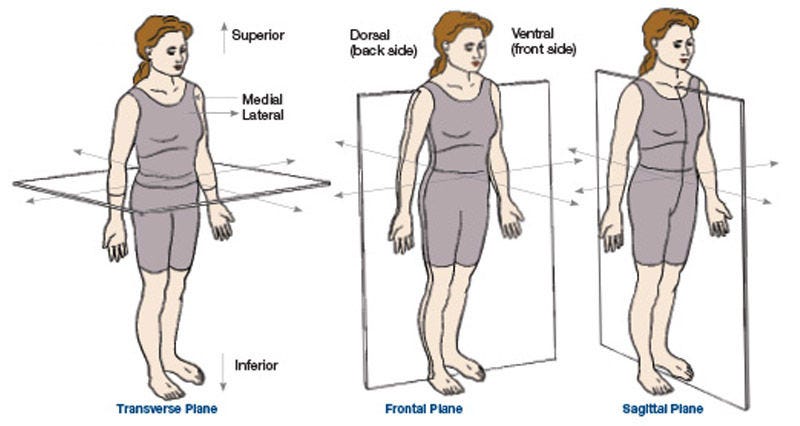
Resistance bands let you work this transversal plane, getting better mileage out of these often neglected stabilizer and antagonist (opposing) muscle groups, but when they’re being used in real life movements as opposed to the isolating nature of a machine lift. In other words, you’re doing real shii in the transversal plane, not the abstract movements of the frontal plane or the isolated movements of the sagital plane. Pat MacNamara, one of my favorite fitness guys, calls the transversal the “combat plane”. Think magazine changes, hand-to-hand combat, etc.
Here’s an excellent demonstration from Pat. He’s a retired special forces guy, so the pounding metal music, speech cadence, and golf cart on a retiree McMansion outside Fort Bragg are all to be expected. I find him to be a little overbearing on the masculinity stuff, but he’s certainly earned the right to act like that. He did hostage rescue in Special Forces for over 20 years.
Such benefits are inaccessible to machines and free weights that are instead designed to isolate muscles or muscle chains.
Here’s Pat demonstrating an entire “combat workout” (my words) using only his branded resistance bands if you want to see more (19 minutes):
Resistance bands also team up with squat racks (or Pat’s golf cart) nicely to unlock some pretty cool and exercises. They’re also great for stretches:
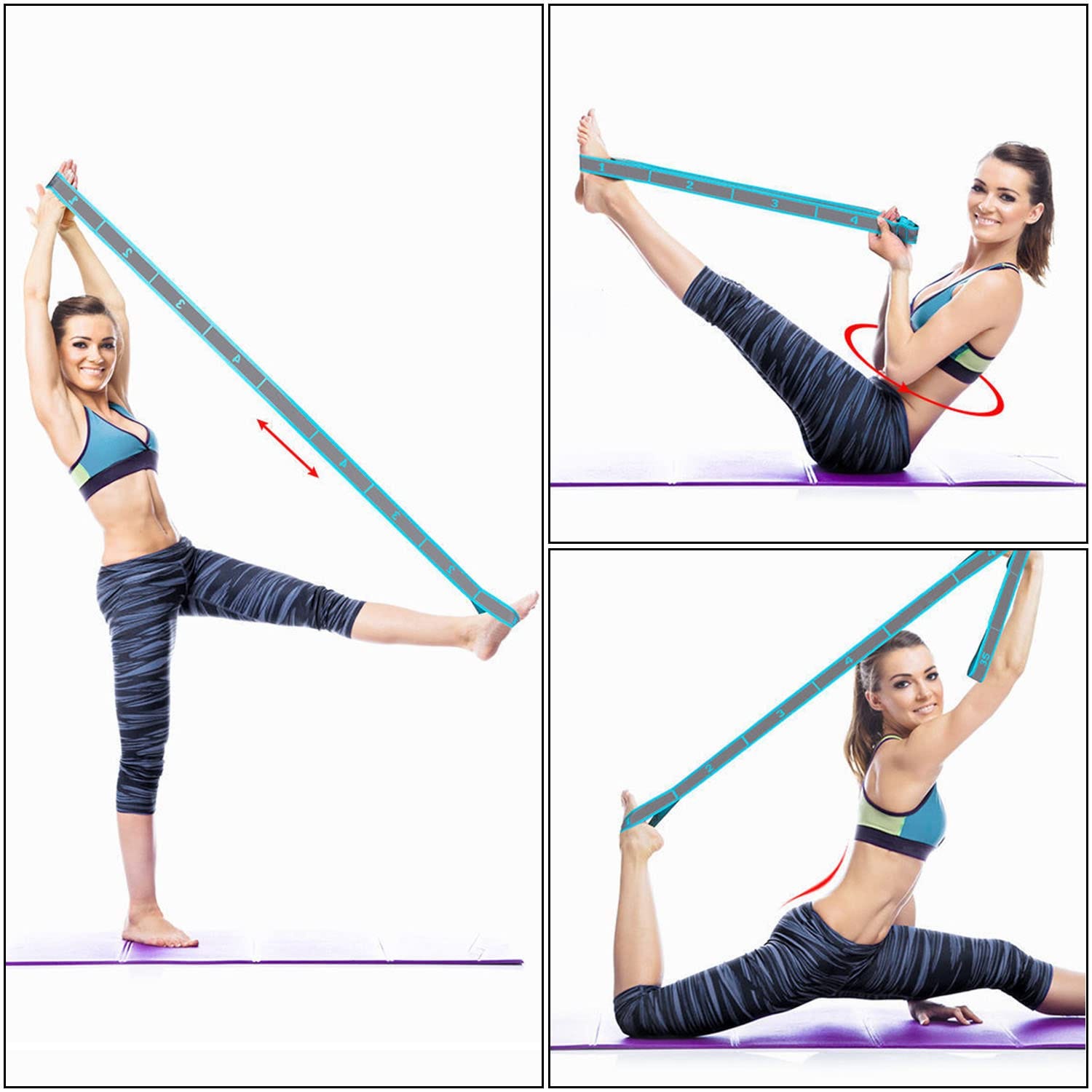
An acceptable initial compromise for noobs without equipment or disposable income for a gym membership would be to try just get some bands off the internet and do some stretching and resistance training with them, particularly if you’re truly too busy/broke to commute to a gym. You can knock out some solid training with heavy resistance bands in 15 minutes.
Rucking: Not to be confused with hiking, rucking is about moving quickly under heavy load. It’s different from hiking because its more of a sport, whereas hiking is basically just doing enough fitness to support being in a cool remote destination. You can ruck anywhere, including cities, which cannot be said of hiking.
Anyway, I consider rucking to be the ultimate lifestyle fitness sport. It’s low impact, highly practical, strengthens your whole body, and is a suitable alternative to running for guys who can’t run very much. It can turn into whatever you want it to be: you can cruise along with your girlfriend or buddies at strolling pace, or you can try to crush a good pace on your own. Maybe you use it to train for difficult hikes in the mountains. It’s a fantastic way to spend a Saturday morning, especially if the weather is nice. The only downside is that it can take hours upon hours, but this can be remedied by audiobooks/podcasts, prayer, conversation with friends, contemplative silence, or even calling family on the phone. I’ve spent many miles in the woods on the phone with friends from college, grandma, etc. They’ve patiently endured my labored breathing as I go over hills before meekly resuming our conversation as if I were sitting in a recliner next to them.
I was going to put a lot more here (I truly love rucking) but I don’t want this article to be massive again. Instead, I’ll give you a cool resource. Go to ruckingtough.com and sign up for a march, once you’re sufficiently trained. These virtual marches are a cool intersection of sport and history that chudstack will be interested in. For example, there is the “Austerlitz marche” where you load your bag with the weight of a typical Napoleonic soldier and march the distance the French army did at the battle. These are designed to be virtual, but if you live nearby, you can actually do this on the real battlefield. At the end, you get a cool ribbon and medal to commemorate the event. It’s just a nice way to keep rucking fun and have goals to train for. Since these are conducted by foreign militaries, Zogbots can allegedly put the ribbons on their dress uniform.
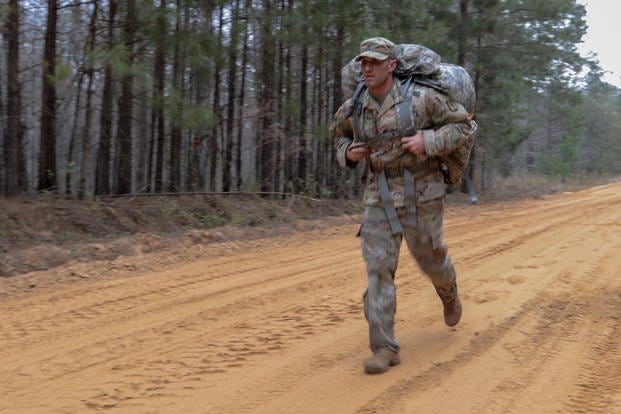
Here is Rucking Tough’s sample plan to get a noob to doing a 20k (12.5 miler, the gold standard in rucking) without exploding. If you’re egregiously fat, I’d try something like this to get the ball rolling. Going out for a jog at 300+ is like taking a jackhammer to your knees, hips, ankles, etc. It might seem counterintuitive to temporarily become 20 pounds heavier, but you’ll see what I mean if you end up trying it. Rucking shreds fat. Conducting consistent, slow state, medium intensity, long session cardio is like pouring battery acid on fat cells.
6-Week Beginner Ruck Plan
Goal: 20 km ruck at a steady pace (~15–16 min/km / 24–26 min/mile) with a moderate load.
Starting Load: 20 lbs (9 kg) in your ruck.
Target Load: 35–40 lbs (16–18 kg) by Week 6.
Ruck Frequency: 2x per week (long + short).
Strength & Conditioning: 2x per week (bodyweight & core).
Rest Days: 2–3 per week (active recovery like walking, stretching, biking).
Week 1
Short Ruck: 4 km (2.5 mi) @ 20 lbs
Long Ruck: 6 km (3.7 mi) @ 20 lbs
Strength: Push-ups, air squats, planks (3 rounds of 15/20/30s)
Week 2
Short Ruck: 5 km (3.1 mi) @ 22 lbs
Long Ruck: 8 km (5 mi) @ 22 lbs
Strength: Add lunges + pull-ups/rows
Week 3
Short Ruck: 6 km (3.7 mi) @ 25 lbs
Long Ruck: 10 km (6.2 mi) @ 25 lbs
Strength: Hill sprints or stair climbs (6–8 repeats)
Week 4
Short Ruck: 7 km (4.3 mi) @ 28 lbs
Long Ruck: 12 km (7.5 mi) @ 28 lbs
Strength: Deadlifts (light barbell or kettlebell), push-ups, planks
Week 5
Short Ruck: 8 km (5 mi) @ 32 lbs
Long Ruck: 15 km (9.3 mi) @ 32 lbs
Strength: Core circuit (Russian twists, flutter kicks, side planks)
Week 6 (Taper + Test Week)
Short Ruck: 6 km (3.7 mi) @ 35–40 lbs
Final Long Ruck: 20 km (12.4 mi) @ 35–40 lbs (goal pace: <4 hrs)
Extra Notes
Foot care: Break in boots early, change socks halfway on long rucks, and use foot powder or anti-friction balm.
Pacing: Don’t jog—train at a steady march pace.
Hydration: Aim for ~500ml water per hour of ruck.
Post-ruck recovery: Stretch calves, hamstrings, hip flexors, and do ankle mobility.
Note that I would stay away from “GoRuck” and other grifters who have taken a novel sport and commodified it into oblivion. Get a milsurp ruck and pack it with pillows until you can phase the pillows out for heavier objects. I’d also stay away from weighted vests, “backpacks” and other bizarre offerings in this field. A hiking bag works in a pinch, but don’t go out there with 30 pounds in a Jansport.
Side Note: Genetic Potential and Steroids
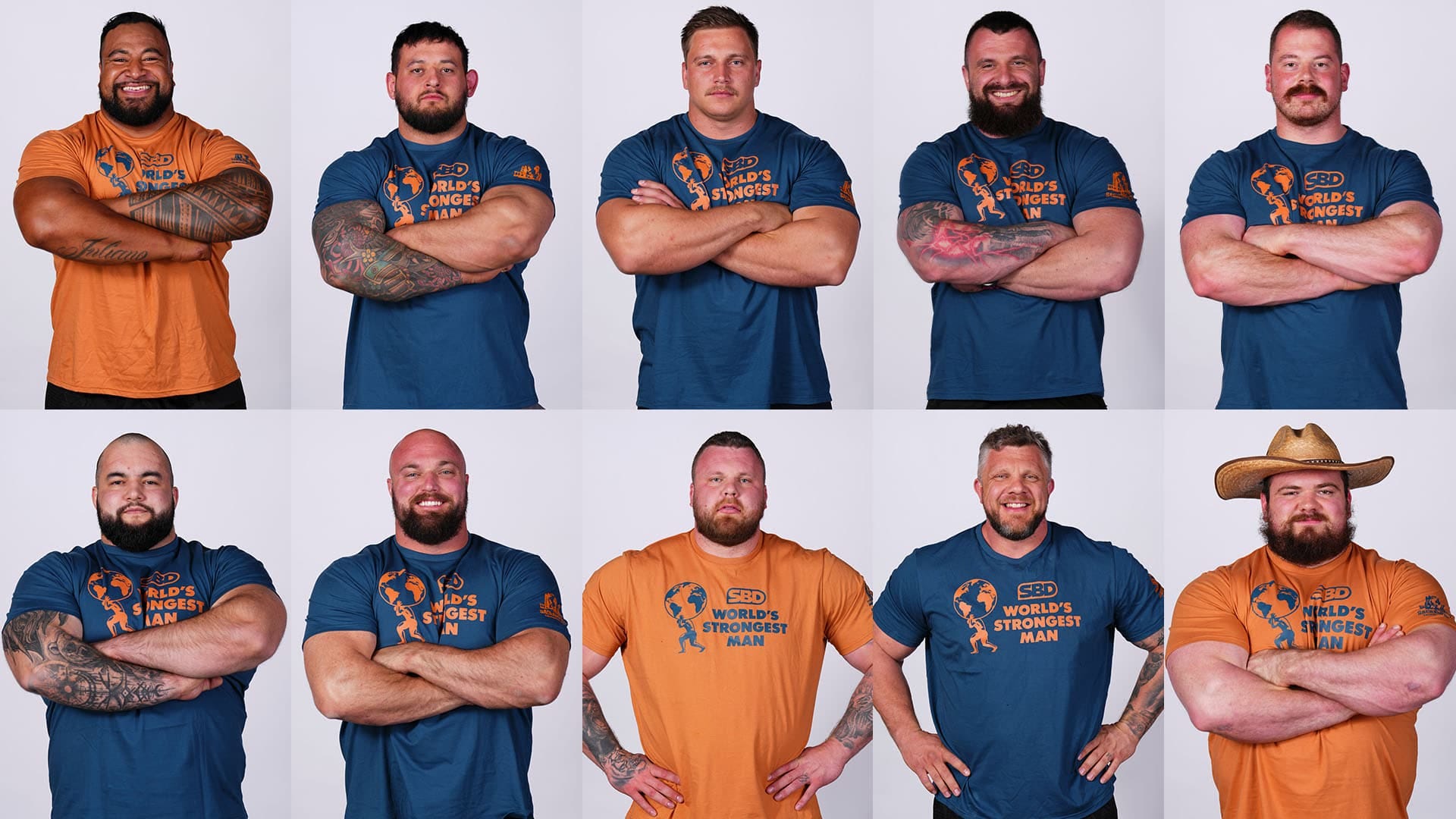
Your genes are the most important element of physical training, despite not being very “visible” in daily training. For a more visible example, consider briefly the sports that whites and blacks are good at. Here’s a photo of this year’s World’s Strongest Man competitors:
And here are the competitors in the 100m sprint in last year’s Olympics:
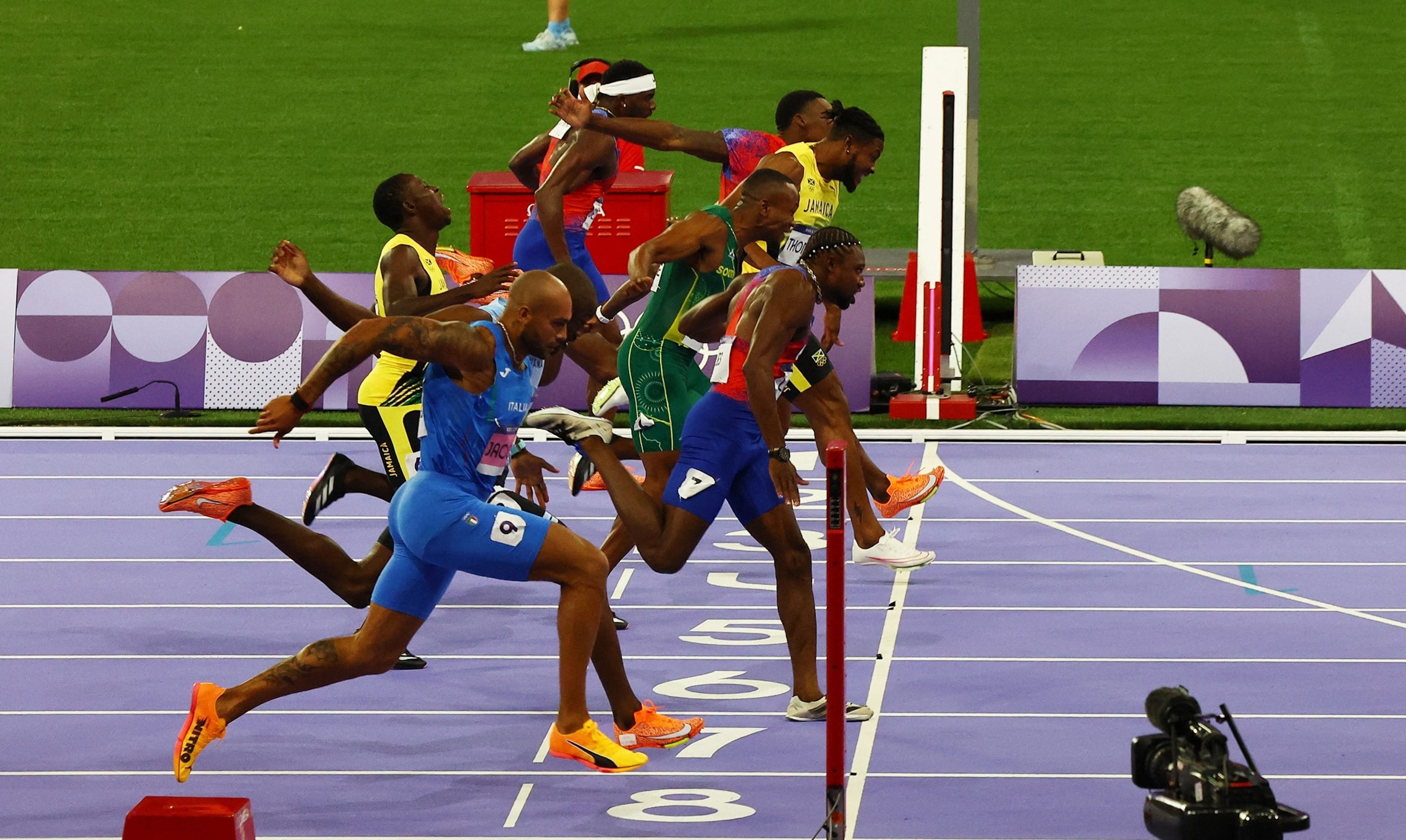
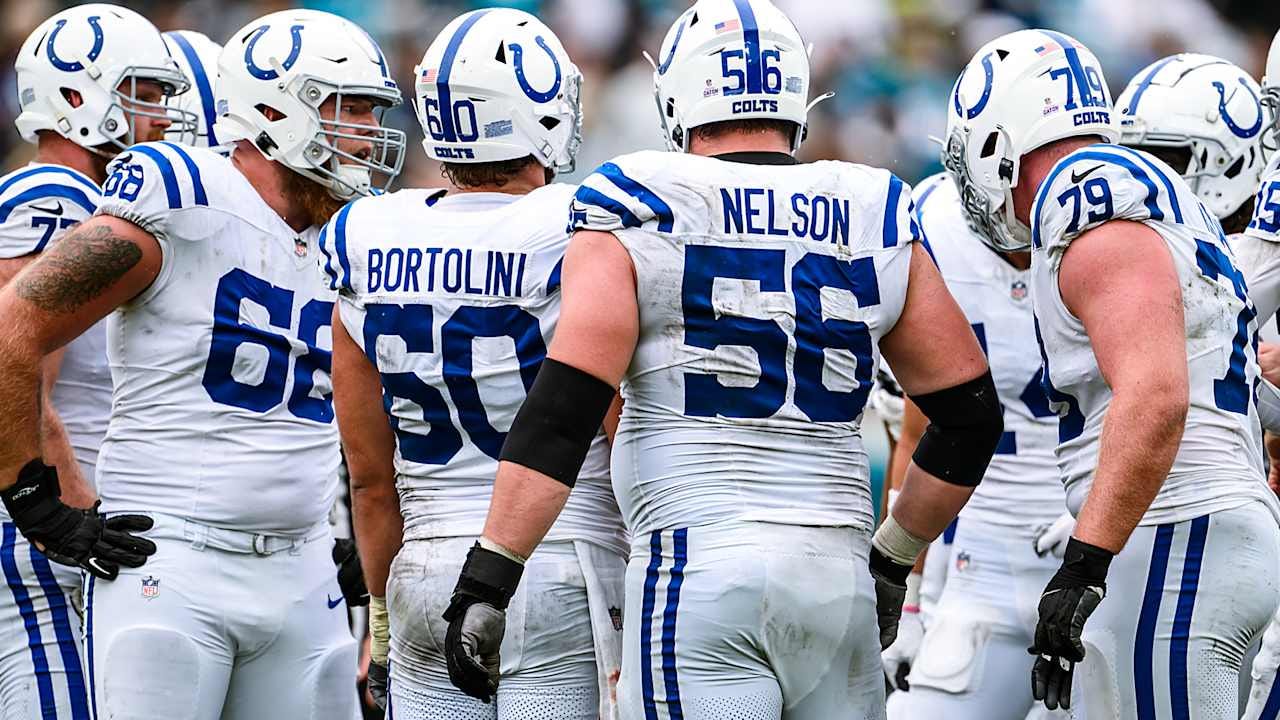
When people say whites are “un-athletic” (which is also just not true), they really mean we typically possess a lower amount of the fast twitch muscles used in some of the most entertaining sports. Again, here is the best Offensive Line in the NFL this year:
And here’s probably the worst:
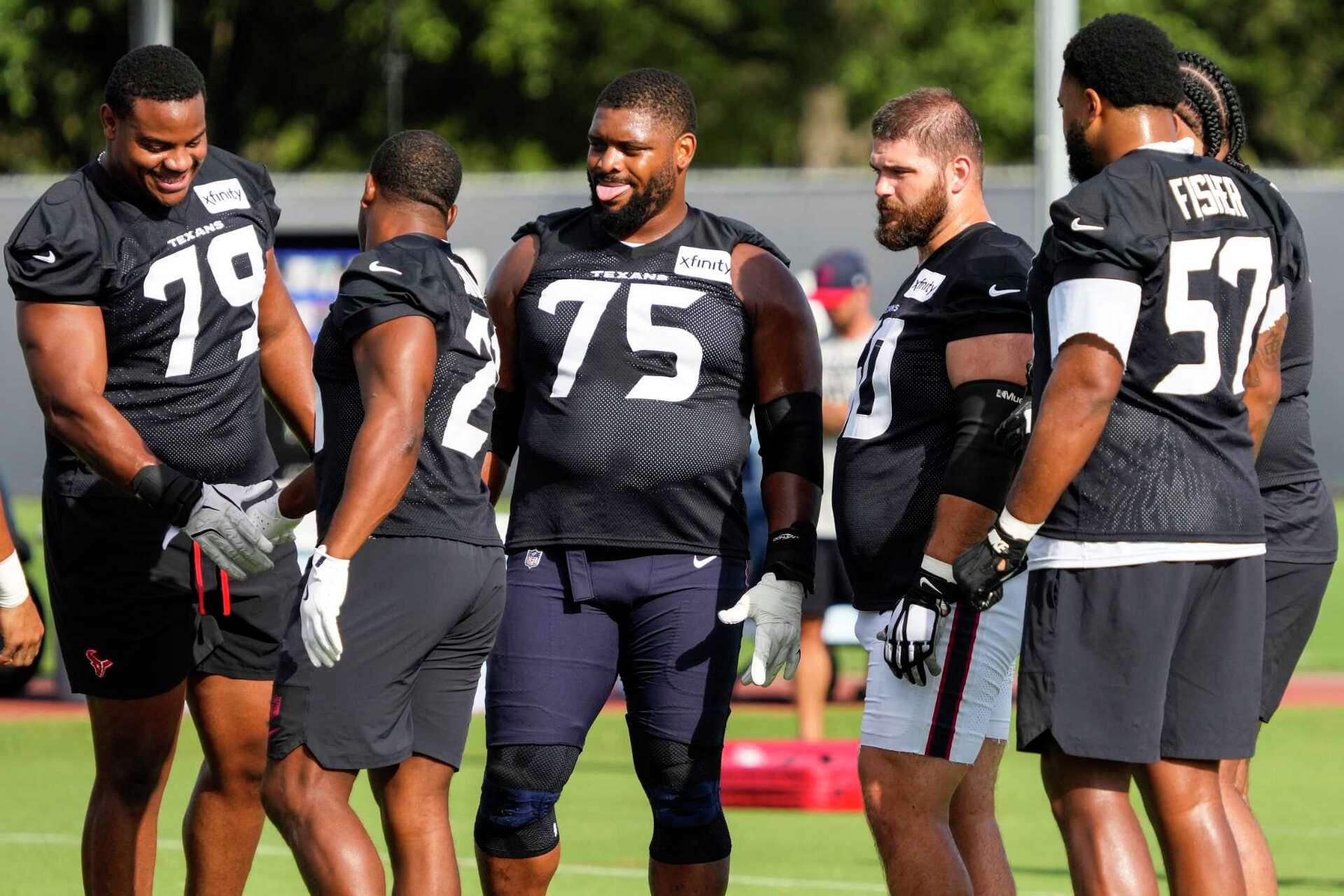
There are many variables that contribute to the success of any sports unit, especially the famously difficult offensive line, but you get the idea. For the record, there have been lots of bad all-white O lines and lots of good mostly (not all) black ones.
I need to let you know that one of the most important elements of physical fitness program is setting realistic expectations. There is an insurmountable, immutable hard cap to your genetic potential. Unfortunately, you cannot progress infinitely. Most people never achieve their genetic potential in any area of life, and even fewer achieve it in the gym.
I’m bringing this up because I want you to be aware that you (statistically) do not possess superman genes. You cannot lift well enough and hard enough to overcome that fact and “work hard enough” to be the World’s Strongest Man, or Mr. Universe. As you make your way into the lifting industry, there are going to be lots of snake oil supplement salesmen that want to act like you’re one chemical compound away from looking like Arnold. Realizing you’re never going to look like an all-time legendary physique will save you lots of pain and credit card expenses in the future.
That you won’t be literally the best looking guy on earth shouldn’t detract from a long and satisfying career in the weight room where you look and feel great. Seriously, lift hard and capture your potential. Carve yourself from marble, become a Hercules with a great zeal for the gym and beyond, but understand you are likely never going to achieve a male model physique or be competitive in international bodybuilding, etc. Moreover, your progress might be slower or faster than others. Maybe you need more or less recovery time than your friends. Maybe you plateau faster than them, or more frequently. You can’t let this defeat you, and you can defend against defeatism by being realistic with yourself. In the same way that a 5’9 guy cannot (statistically) shoot enough free throws to “will” himself into the NBA, you cannot exceed your maximum genetic potential. Don’t you dare let this realization stop you from trying!
As the prolific Mike Mentzer affirms bluntly:
Along with certain psychological factors necessary in pursuing a goal to its fulfillment, there are definite inherited traits that represent the single most important consideration in building a championship physique. While anyone can improve upon his starting level of development, only a select few will become top champions, and these are the ones with the greatest abundance of the required inherited physical characteristics.
When guys get hooked on the gym, it can be hard for them to accept that they’re eventually going to stop progressing. Once the ez victories in the mirror slow to a crawl, some will stumble into steroids as a way to keep the balling rolling. I cannot advise against steroids or any form of performance enhancing drugs (PEDs) enough. They will basically kill you after prolonged use, typically from heart failure. They cause irreversible and instant damage your first “cycle”. They also wreck your hormonal/endocrine system and sap your strength. You basically get bipolar disorder from using the more aggressive versions, you get man boobs from the excess estrogen production after a few years, and they nuke your fertility. Also, guys on steroids are simply repulsive looking:
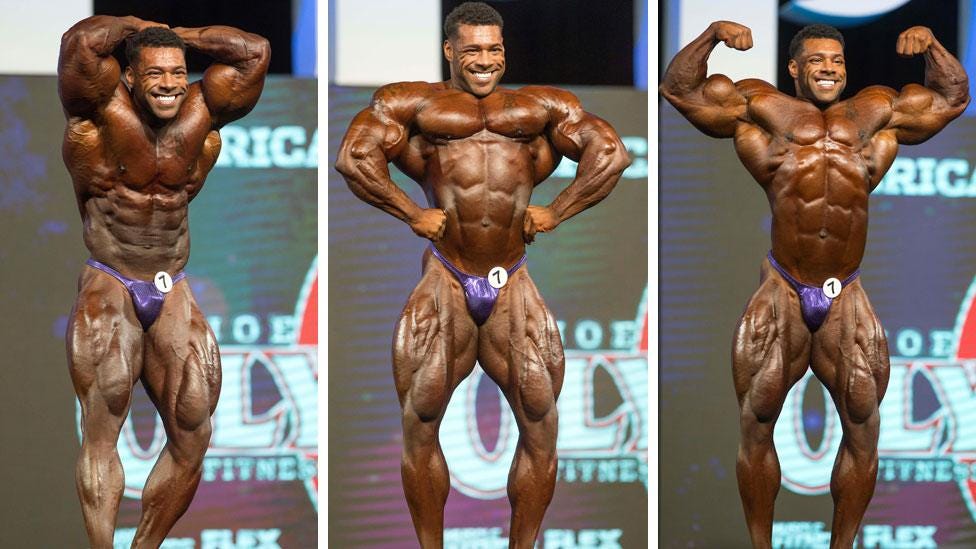
It looks like he’s wearing a costume. Nobody finds this impossible level of muscle size and definition impressive. Girls certainly don’t find it attractive.
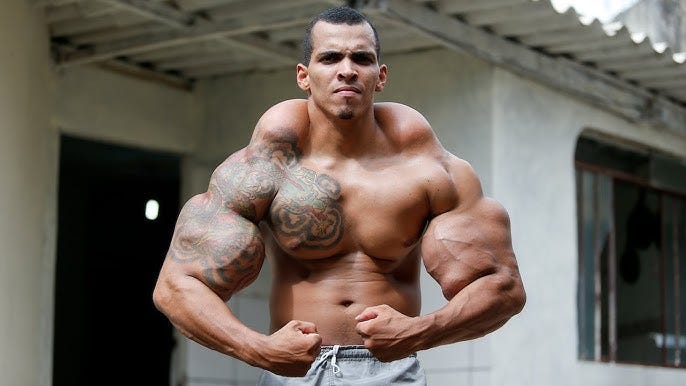
I’m sure my audience is large enough for an “erm akthually PEDs are good in small doses” nerd emoji (FasciRTS..) but I’m telling you its just not worth it. I think steroid use is a symptom of body dysmorphia, or at least being extremely unhappy with the way you are. Spamming grotesque muscles doesn’t make you any less ugly, if that’s what you’re so concerned about. The only thing I can think of worse than steroids are the grotesque “synthol arms” of Mexican and Russian fame:
Different Types of Gyms
The gym is a funny place because, while there are a few constants, they can look wildly different. Their setups are often reflective of the people that are attracted to them. Sure, you should have some free weights, some cardio machines, some resistance machines, a stretching area, maybe some mirrors, but how these are arranged is almost subjective. I mean, think about how different churches are despite their common motifs: the offering plates, a place for someone to speak, a cross somewhere, pews, etc.
If you’re just starting your journey, one of the most important decisions you can make is which gym to join. A good gym has the appropriate equipment that you need, but the best gyms serve a role higher than merely “place where I go to lift because it checks boxes”. They become a fraternity of sorts, and this positive social network will draw you back even on days you don’t want to lift. I am annoyed by people who come to the gym daily just to hang out, but I get it. It’s immensely preferable to hating your gym and the people in it from the safety of your warm bed.
Here are some of the archetypical gyms I’ve come across in my travels:
Crossfit “Box”
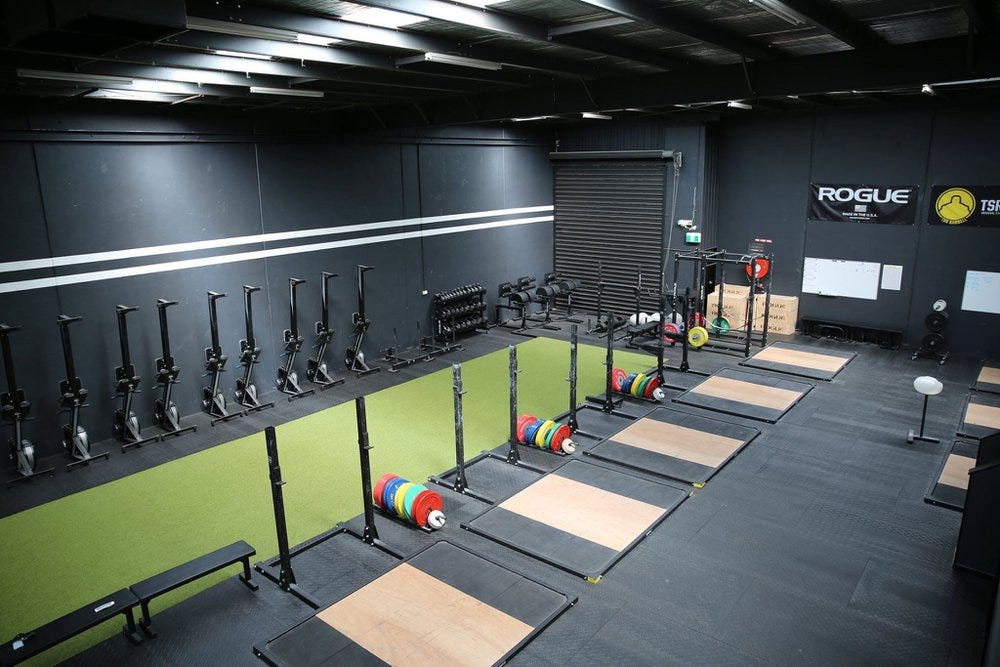
I don’t like Crossfit.
The only lifting injury I’ve ever suffered came from Crossfit, doing a retarded deadlift “EMOM” that tweaked something in my lower back. Indeed, Crossfit is a diabolical attempt to fuse cardio work and weightlifting, two functions that should never be mixed. It’s like when the dwarves in the mines of Moria dug too deep and found things they never should’ve, only if the dwarves were egotistical Fagtards in neon spandex. As a result, Crossfit gyms (dubbed “boxes” by their cultists, more appropriately called “coffins”) are often injury factories. They attempt to gamify the science of weightlifting to induce peer pressure on overachievers who are forced to attempt advanced and dangerous lifts with poor form and limited rest. Weightlifting is a deliberate process that cannot and should not be rushed. Trying to see “how many times you can deadlift 350 pounds in 30 seconds after sprinting 3 miles with a weighted vest on asphalt” is lawsuit tier levels of negligent, especially because Crossfit often markets itself to complete newcomers who don’t know better.
To be fair, Crossfit style “WODs” are decent when they don’t involve free weights. You wanna see how many times you can throw a 10 pound ball at the wall in 30 seconds after doing 10,000 air half squats? Go right ahead. It’s not the ideal way to train, but Crossfitters often just want to experience feeling out of breath and an elevated heart rate.
Of course, the Crossfitters reading this are likely sharting about the “benefits” of doing it their way, sumn about “functional fitness” and “quantified exercise science. My immediate response is below:
BRAAAAAAAAAAAAAAAAeeeeeeeuuuuoooooooooooooooüaaaAAAAAAAAP.
Then I ask them why they don’t just separate aerobic and anaerobic exercises like everyone else. Why “do 100 burpees and pushups in 3 minutes or less” when I can do an upper body resistance circuit and then run on the treadmill for greater cardiovascular and muscular benefit? Nobody can answer this, partly because the most devoted Crossdressers fitters are perpetually under anesthesia for the latest vertebra fusing surgery.
Instead, they point to their complete pseudoscience “credentials”. Crossfit loves credentialing people who have no business being in a position of authority. Because the activity (I’m not dignifying it with the title of “sport”) attracts the Type-A variety, they’ve built out an entire ecosystem of little badges and licenses and metrics to award each other for making number go up. Really, the licensing just demonstrates how brainwashed you are into the Crossfit religion system.
Want to be a Level 3 Jackass? Criteria for the exam includes: How many acronyms can you memorize? How much Rogue branded garbage can you finance? How many sponsored supplements can you order? How many influencer promo codes can you apply at checkout? How much caffeine can you ingest? How many non-ballistic plate carriers can you wear per week? How many military branch logo or generic motivational flags can you hang up? How many basic compound movements can you butcher? How many boxes can you jump on above an insufficiently padded concrete floor? How many joints can you destroy with improper form? And so forth.
Let’s have a laugh at their homepage for “certification”:
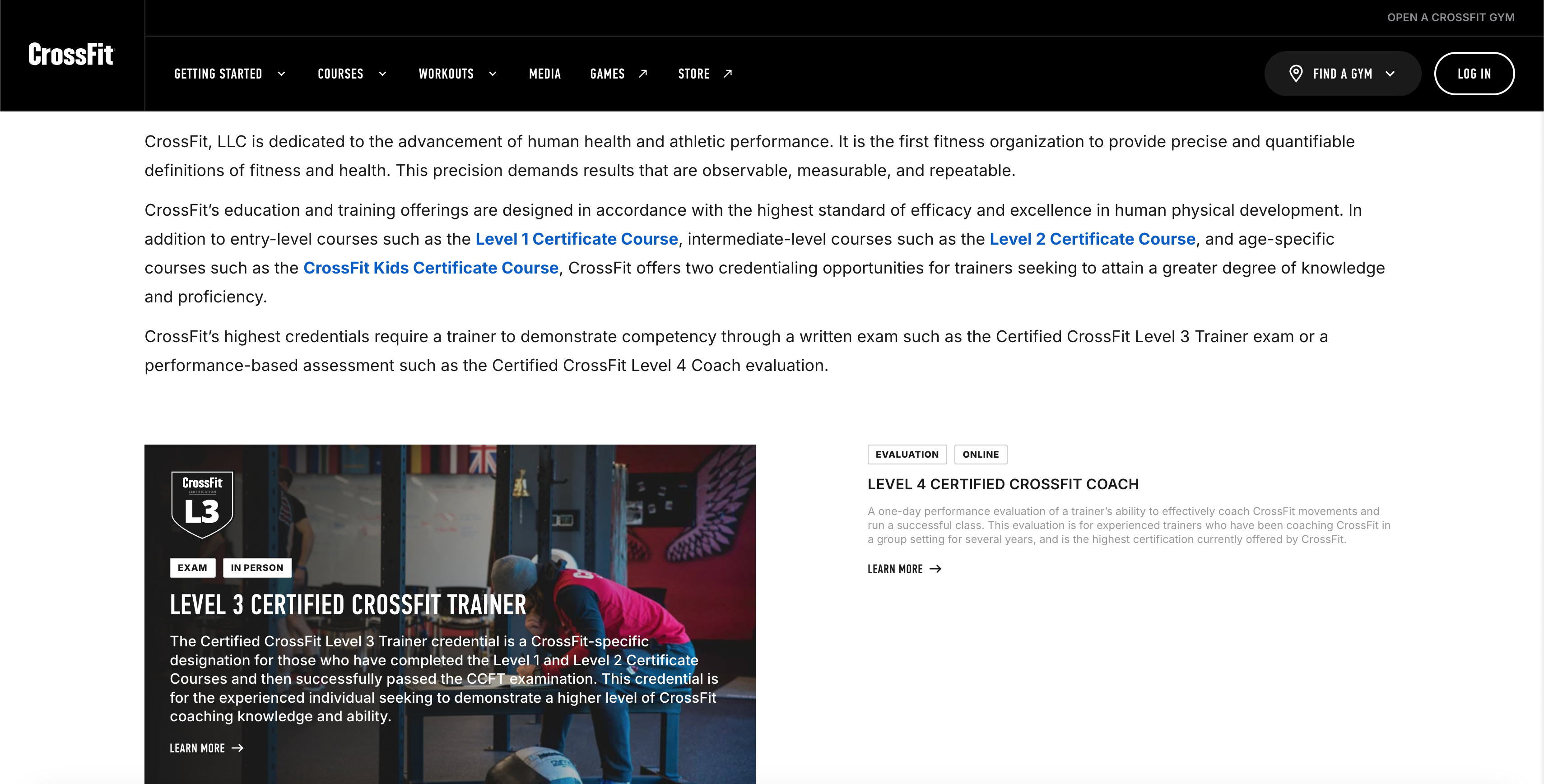
There isn’t a single true statement until the second paragraph, which is “subjectively true” marketing garbo. The highest level of certification requires a single day of evaluation by other idiots. Keep in mind, this is the LLC (which stands for “limited liability company” btw, ominous for a gym chain) that teaches people to do pull ups like this:

because their culture rewards rep spamming and the “just get the weight up no matter the form” mentality. They will tell you the guy in that GIF just did 100 pull ups and is therefore an ordained Level 3 Gigatard that is now fit to critique the way you injure yourself. In my own life, I’ve had CrossShit instructors tell me I’m wrong for not using improper form—unironically. They will hound you for not “bouncing” through lifts instead of lifting through them with full range of motion. Then they sit back and screech about their credentialing. Well, since it matters apparently, I consider my TSAC certification to be far more legitimate than their shitty homebrew courses. These guys cannot go band for band on any domain of exercise other than their own products (good luck getting a CrossFit instructor to walk you through the process of protein synthesis, for example), and it reflects in the quality of their exercise.
Go look at their WODs (Workout Of the Day) and you’ll see how foolish most of their training is. Merely the information in this guide alone (a gallop through real exercise science) is sufficient to identify the horrible ideas wrapped up in their flagship product. Note that the date is posted in the bizarre and illegible military format (Year, Month, Day), a tip of the fractured spine hat to the vast number of thickskulled military guys that love Crossfit because its so epic-ly quantifiable and tiring and heccin’ Type A.
It gets worse. Think the WODs are stupid? Try Hero WODs! Imagine dying in combat and the way you’re remembered is by people injuring themselves on a spastic “workout” with your name on it.
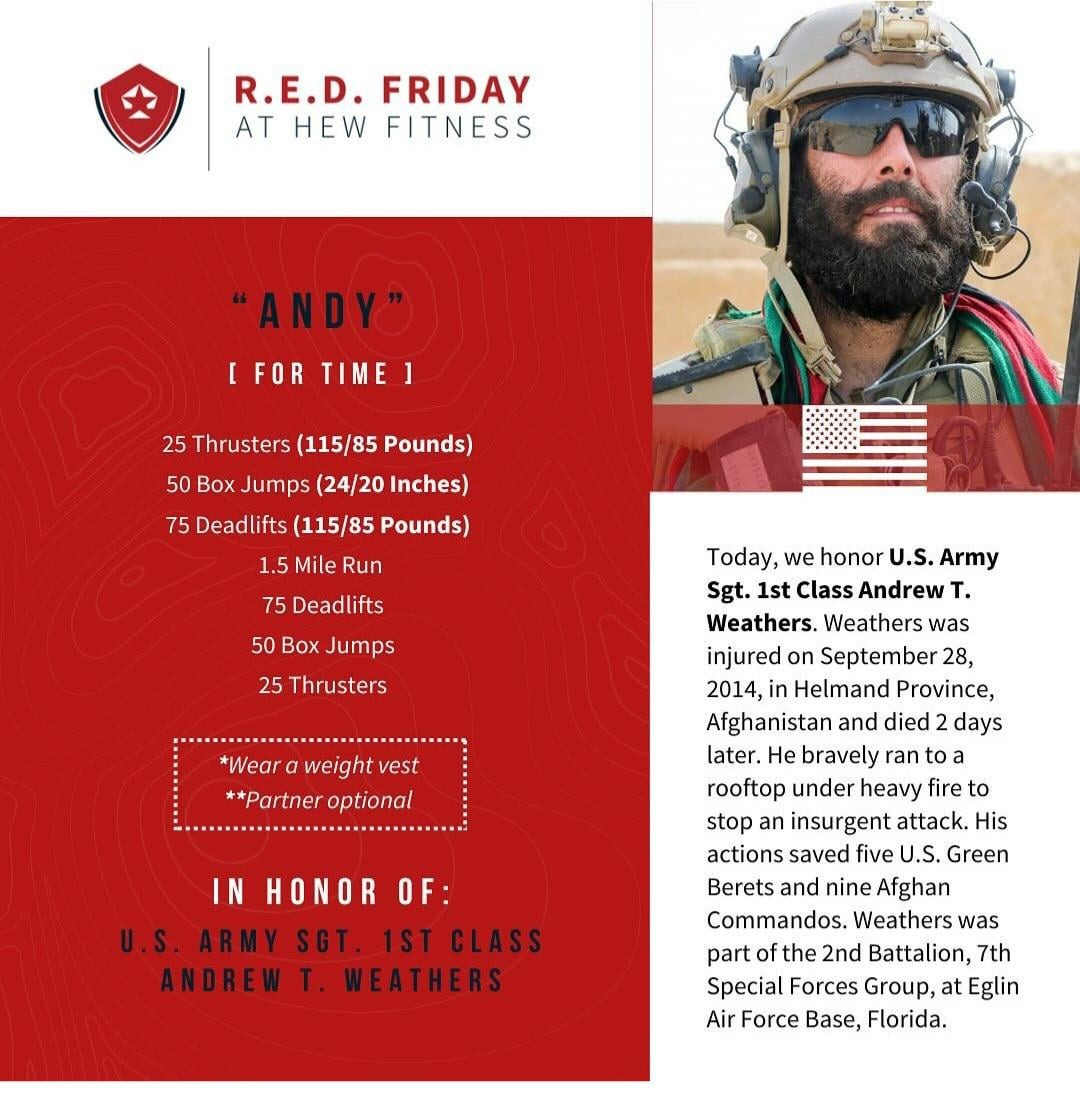
Anyway, much of these workouts involve rewarding people for accomplishing an (arbitrary) objective as fast as possible, or as many times as possible. Invariably, that means cutting corners or sacrificing form. Thus, you have the perfect mix of competition, pride, and performance anxiety to cause serious injuries. And, oh boy, do the injuries happen…
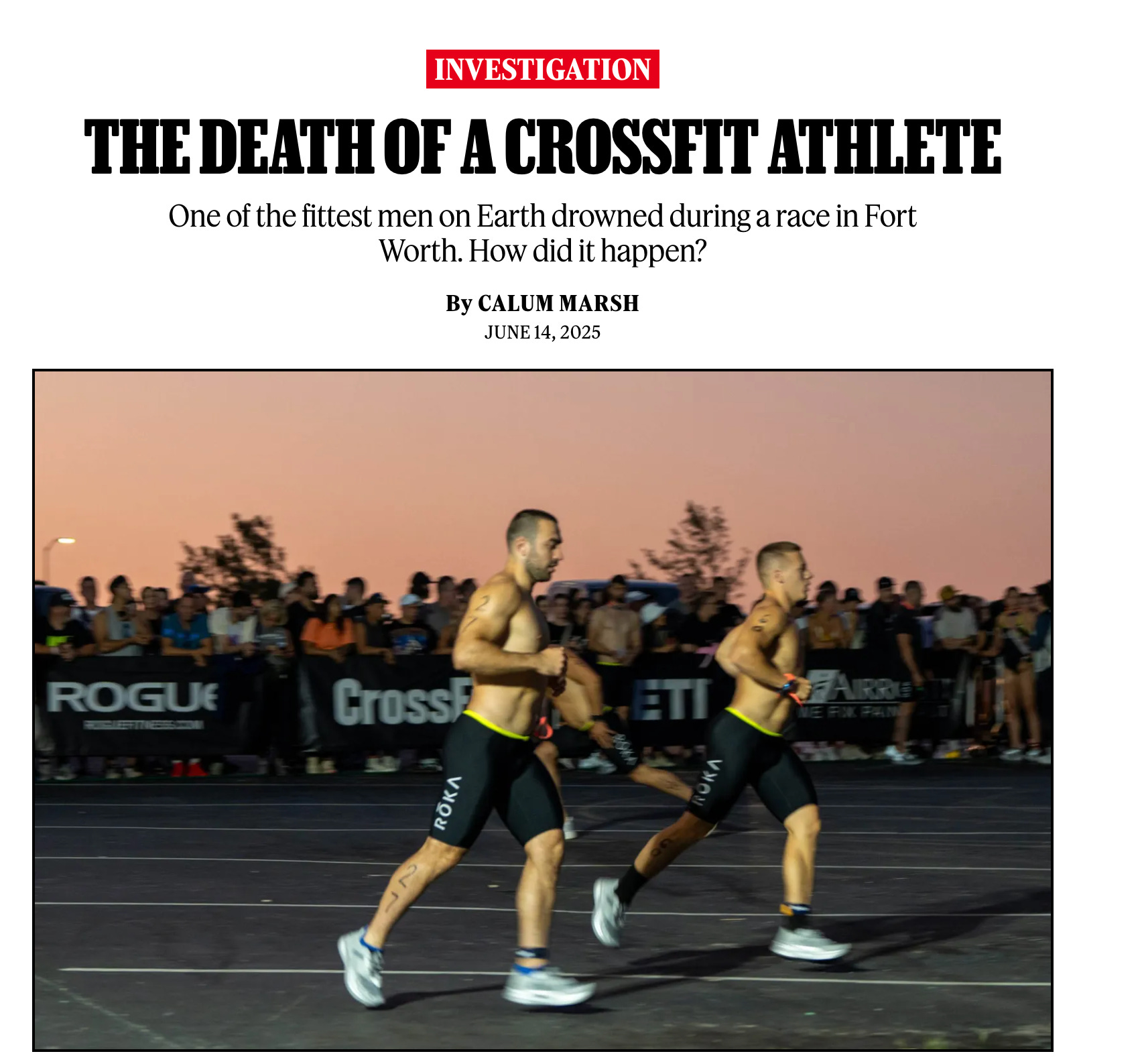
Now, I will say there are some Crossfit people who are superb athletes. When the system works as intended, they can endure a seemingly endless torture buffet of dubious athletic utility. These guys would smoke me in any athletic event outside pure strength lifts or perhaps rucking. To be fair to my own hatred of Crossfitters, there aren’t many of them that can claim this, and their status is temporary given the way Crossfit irreversibly shreds connective tissue. Their primes are short and violent, like getting drafted to the NFL.
Most of the elite ones compete in the “Crossfit Olympics”, which is a celebration of everything that makes Crossfit terrible: weirdly qualified and quantified exercises, timing everything, clueless credentialism, horrible form, opaque standards, extreme lifts with weights you can’t choose, no rest, injuries, and a gaggle of retards pressuring other retards to “achieve” in their shitty little ecosystem despite their bodies shrieking desperately for them to stop. All in the name of vainglorious Type A neuroticism.
^I was talking about Crossfit here, btw.
One of my favorite fitness Youtubers is a guy named InfiniteElgintensity who posts an annual recap of this year’s horrible Games, dubbed the “Washed up Loser Olympics”. Watch the 2021 cut (a personal favorite) to see just how much of a dysfunctional mess Crossfit is at even the highest levels:
If you didn’t watch, the standby medical team is so used to people injuring themselves during the Games that they are extremely slow to react to the girl in the thumbnail yanking her elbow out of socket on a power clean. Lmao.
If you’re a noob, please take my advice and stay far away from Crossfit. I get it: it’s impressive looking, there’s pressure from high performers to engage in it, you’ll feel like a beast after their little WODs, the workouts don’t take very long, you probably feel good after. The fact remains: CrossShit is not a sustainable program for success. It beats the living fuck out of your joints and connective tissues, and you are beholden to the judgement of some of the worst people in the gym world to know if you’re “progressing”. You will pay for being a Crossfitter in your old age. It’s almost worse than not exercising at all.
If Crossfit is your only option, there are some serviceable coffins boxes full of people who don’t fit the stereotype. My advice is to do some sleuthing and determine how many regulars are “out” with serious injuries. If it’s more than 2, sprint away as fast as your still-functional joints can carry you to the parking lot.
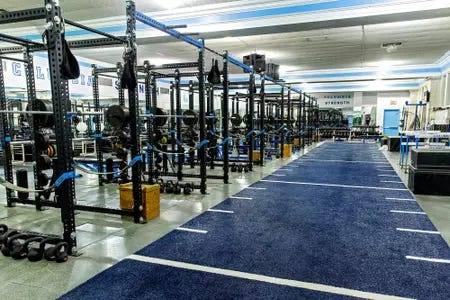
Free Weight Dudebro Gym
This is my preferred venue. They’re a massive part of the gym ecosystem, perhaps 1/3 of all gyms could be classified as dudebro gyms, and so their quality and individual traits vary greatly. Ultimately, you’re gonna see a ton of free weights, a modest cardio offering, comically large dumbbells, and a few guys on ‘roids. Expect to also spot shirts that are only nominally held together:
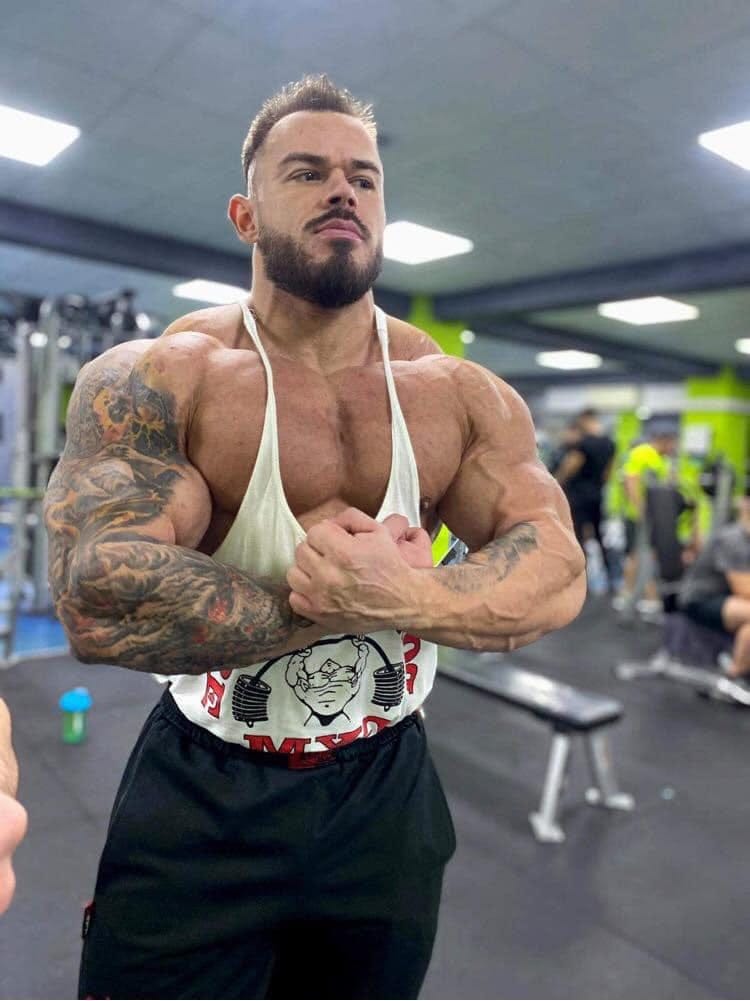
along with a few rusty water fountains, tires, weighted sleds, patches of turf, and maybe even a few OGs from the 90s and 2000s still haunting their old barbell stations. Oh, and these places typically have the military flags, but in a less annoying context. They often have amenities like bodyfat scanners (lots of bodybuilders like dudebro gyms, for obvious reasons) and 24/7 gym access. If you’re not “gymtimidated”, and it’s okay (for now) if you are, these are great places to start. They’re sort of the default for young, straight guys. You might even find a mentor.
Prison Gym / Dungeons
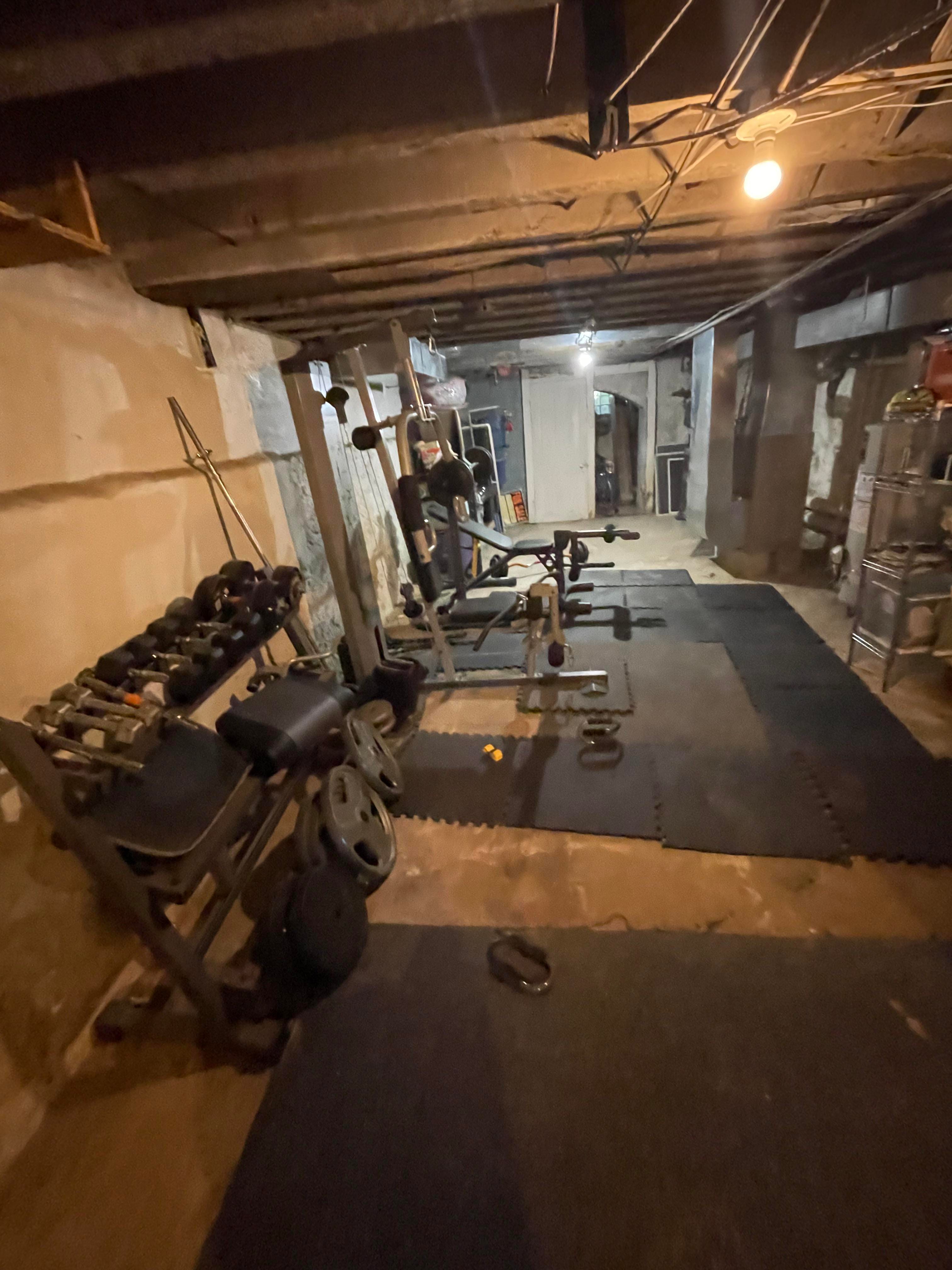
Man, I love these. The title “Prison gym” is sort of a joke, meant to indicate that the equipment is often quite old and not well maintained. Some of the best gyms I’ve ever been to were certified “dungeons”: hidden away somewhere (one was in a basement underneath the pool of a university), small membership, limited equipment, weird hours, the whole thing feels more like a spy ring than a place you go to exercise. Often, they don’t have websites or even phone numbers, you just sort of stumble upon them. If you can find one near you, I really recommend them. They often have quirky rules (I went to one that bizarrely banned headphones) and owners, a large percentage of whom are retired OGs who run the gym as a hobby. With the way the fitness industry is going, I foresee these going away in the next few decades— especially as the OG class of the 1980s continues to age. Enjoy them while you can.
Cardio Bunny Farm
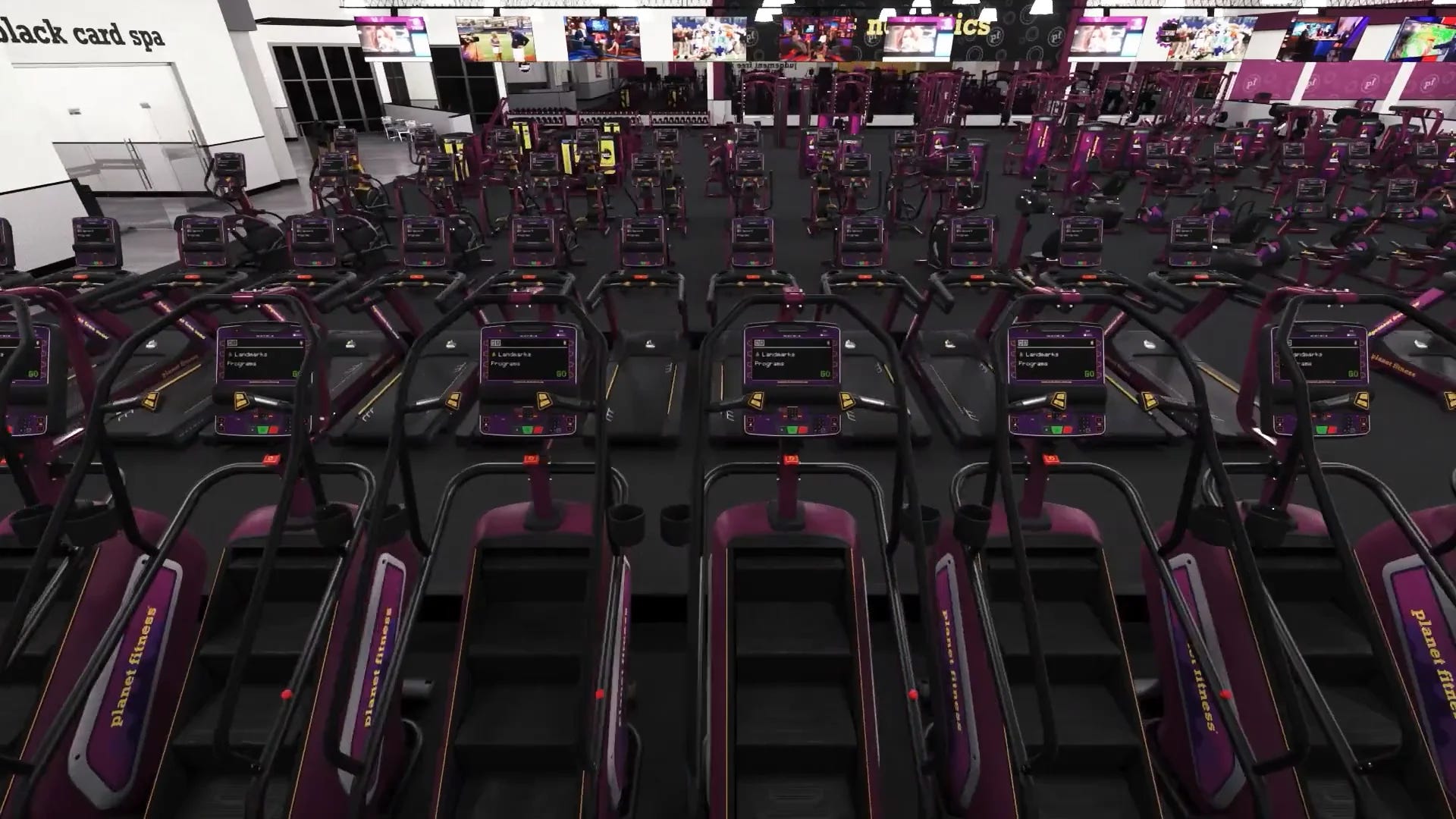
“Going to the gym” can mean many different things. For women, it’s almost always about “toning up” some random part of their body (I once met a woman who wanted to “tone up” her forehead) which entails cardio. These gyms do have some resistance training stations, but that’s not why people go to them. Obviously catering to normies, the average trainee here just wants to walk on the treadmill for 30 minutes before hitting the glute blaster and going home. Oh, and taking lots of pictures as they do it.
I don’t like these gyms because they cap your power levels early in the process. Nonetheless, they’re convenient and accessible and often relatively cheap. No shame if you can only make it to a cardio farm, so long as you understand their limitations. Nobody is getting jacked at a cardio bunny gym. You might get skinny stealth build shredded though.
Class-Oriented “Studio”
A close cousin of the cardio bunny farm, the studio attempts to carve a niche by taking out all of the mental overhead for exercise. Instead, you show up at a time someone else picked and perform a workout someone else made. Oftentimes, the workouts are yoga, Tabata, Pilates, P90x, etc. themed. These places try to be upbeat, trendy, plugged into social media, and inviting for wary untrained normies.
Sometimes they have a somewhat exploitable pricing scheme that “just gets you in the door today” for free, but they’re often harmless. It’s all designed to be accessible for youngsters that don’t want one more thing to figure out in their early adult lives, or moms, or other demographics not necessarily known for their athletic prowess. They’re also typically heavily branded (especially if they’re a chain) and have an endless parade of events on the calendar designed to be engaging for normies. Like, they might all wear costumes the week of Halloween or something. I’ve noticed these places all hit the psychology of actually attending workouts really hard, often with rituals like posing for a social media post to celebrate the Xth time you showed up:
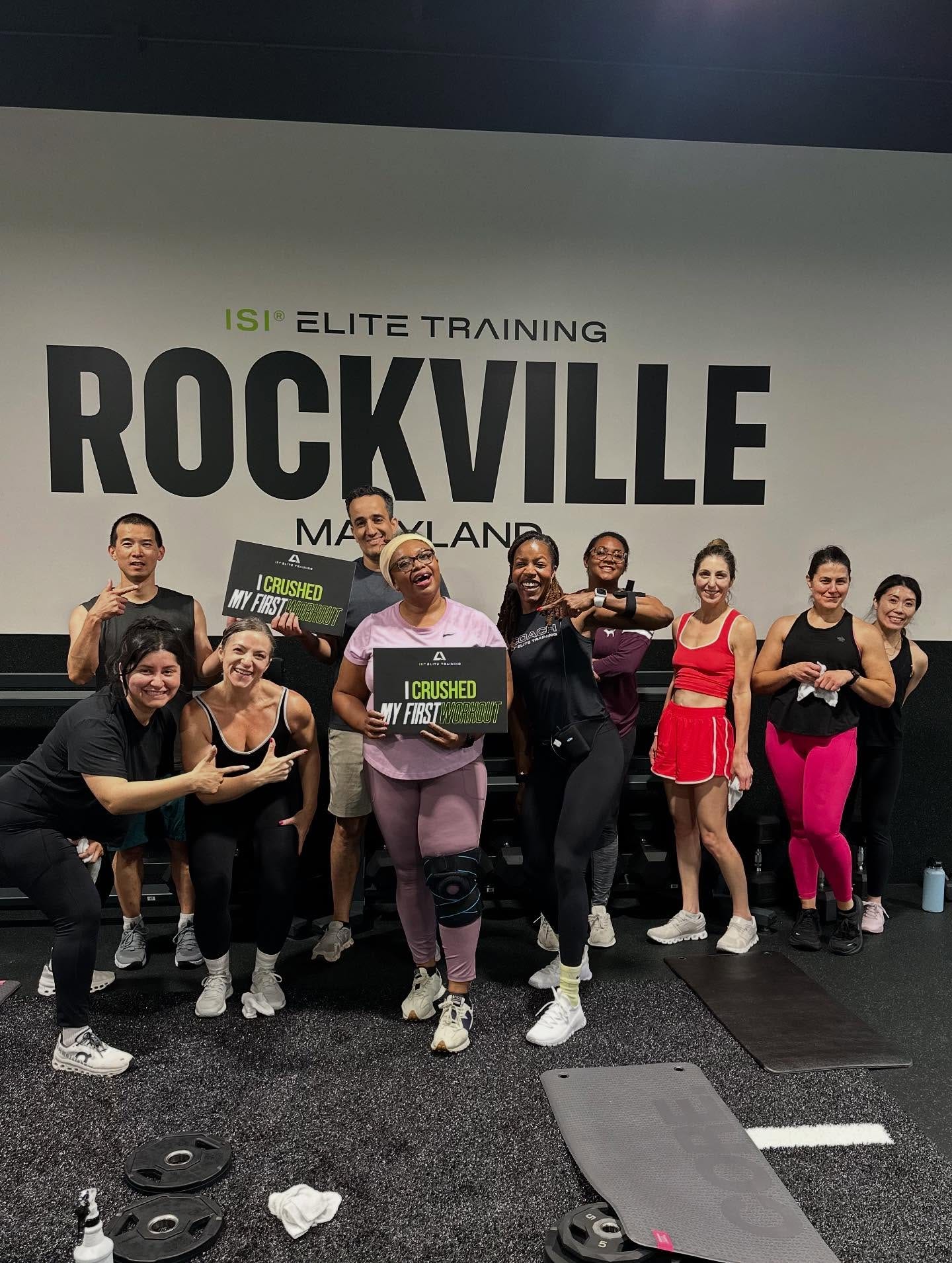
I’m being a little dismissive because these studios are often more social venue than true gym. However, a small percentage of them are absolute rock solid calisthenics hellholes in the best sense of the word.
You ever do a 50 minute (real) yoga workout before? How about a 60 minute hot yoga class? Once, my buddies and I went to one of these places because the hot yoga session was $5 on Fridays and we figured we’d be the only guys in there. St. Fauci as my witness, I barely survived the workout. These ladies were doing unbelievable bodyweight exercises in a 140 degree sauna for an hour straight.

I’m talking holding the pushup position while we alternated hiking our feet up to our hands on the stupid yoga mats for 2-3 minutes straight, right into a nasty bout of core bridges and planks— all while the heat smothered the very air you’re trying to breathe. Keep in mind, I was in excellent shape at this time. Nothing prepared me for that heinous hot yoga class. Thankfully, the yoga mat in front of me was occupied by another guy, so I got to look at sweaty man ass crack for the entire hour while my own sweat pooled below me. Serves me right for my devious ulterior motives, I suppose.
If you can find a “studio” of this caliber, you won’t regret attending it. They might not have the free weights you need for true strength and muscle growth, but you’ll turn into a chiseled bodyweight demon on some Hybrid Calisthenics type shii.
Home Gyms
Home gyms are the end goal for any serious lifter. At the end of the day, there’s just no substitute for them. You save money on commuting and memberships, you have complete control of your lifting environment, you have all the equipment you want, and its open 24/7. With all these advantages, there are many naïve liftlets that will pour their little wageslave checks and birthday money into sharting one out. Well, I hate to break it to you, but this is a horrible idea. Gym equipment is expensive. If you can consistently find weights for $1/# (a 45lb weight is $45), that’s a great deal. Now imagine having to set it all up, maintain it, and pack it up when you move. If you’re trying to do this while living in an apartment, dorm, or other impermanent housing, just know you’re keeping the used gym equipment ecosystem alive. Like all of the people that spent $3k on a setup during Covid, it will become an unmanageable burden that will probably spiral into quitting the gym temporarily. I look forward to buying your equipment for 25 cents on the dollar at whatever yard sale you manage to cobble together.
A singular squat rack with about 500# is serviceable and attainable, but even this is expensive and shouldn’t be attempted until you’ve truly outgrown commercial gyms.
A Note on Planet Fitness Specifically
Planet Fitness, aka Planet Fatness and Planet Shitness, is a terrible chain. Remember in my gun article where I talked about how the entry AR-15 market sucks because the industry knows its the inflection point where lots of clueless people (with disposable income) assemble? Planet Fitness preys on the fitness equivalent of that market. They try to sell you on how un-intimidating their gyms are, which is an ostensibly noble goal. Truly, don’t feel bad if you suffer from “Gymtimidation”. The problem is, they are ruthlessly exploitative of the most vulnerable gym population.
They are always dangling pizza and doughnuts in people’s faces— literally as they walk in the front door. I understand this is some pop psychology attempt at “fixing people’s relationship with food”, but it ends up being a really gaudy and performative exercise in which fat people are “invited” to eat doughnuts and pizza before they even work out. Imagine trying to dignify the process of handing a crack addict a lighter and freshly en-cracked spoon. Fat people are at the gym to stop being fat, not to reward their entry level workouts with 500+ calorie indulgences they weren’t planning on. And, if you’re like me, I don’t like eating before I work out— so now they’re just eating a doughnut and socializing a bit before going home.
Another thing that sucks about Planet Fagness is their legendarily awful cancellation policy. “Canceling your Planet Fitness membership” is basically a meme at this point, a running joke that involves cancellation fees, certified mail, BS credit card charges, having to lie to them to meet contract clauses, spam calls, buyout fees, debt collectors, etc. The obvious intention is for you to give up and keep paying the $5, even on top of another membership. They don’t make much money while you’re there (unless you rarely attend, like most PF-ites), they make money when you’re trying to leave. Seriously, Google some horror stories about trying to leave Planet Fitness.
Lastly, the culture of Planet Fitness is that of “toxic positivity”. In their manic attempt at creating a “Judgement Free Zone”, they enforce a Reddit-styled mandatory encouragement approach that is actually quite harmful to the business of improving physical fitness. For example, they bizarrely do not put numbers on the weights so you’re not “judged” by the number on the bar. There’s also zero free weights (?) outside a couple token Smith machines, because free weights are scary and Gymtimidating or something. Moreover, the staff actively hunt people who try too hard, kicking them out for attempting to improvise free weight exercises (I have been “warned” for turning a Smith machine squat rack into an ad hoc bench press by a skinnyfat Redditoid). They also have the infamously stupid “Lunk alarm” that sounds whenever someone audibly exerts themself on a lift. Wow, how degrading for a place that specializes in a “Judgement Free Zone”!
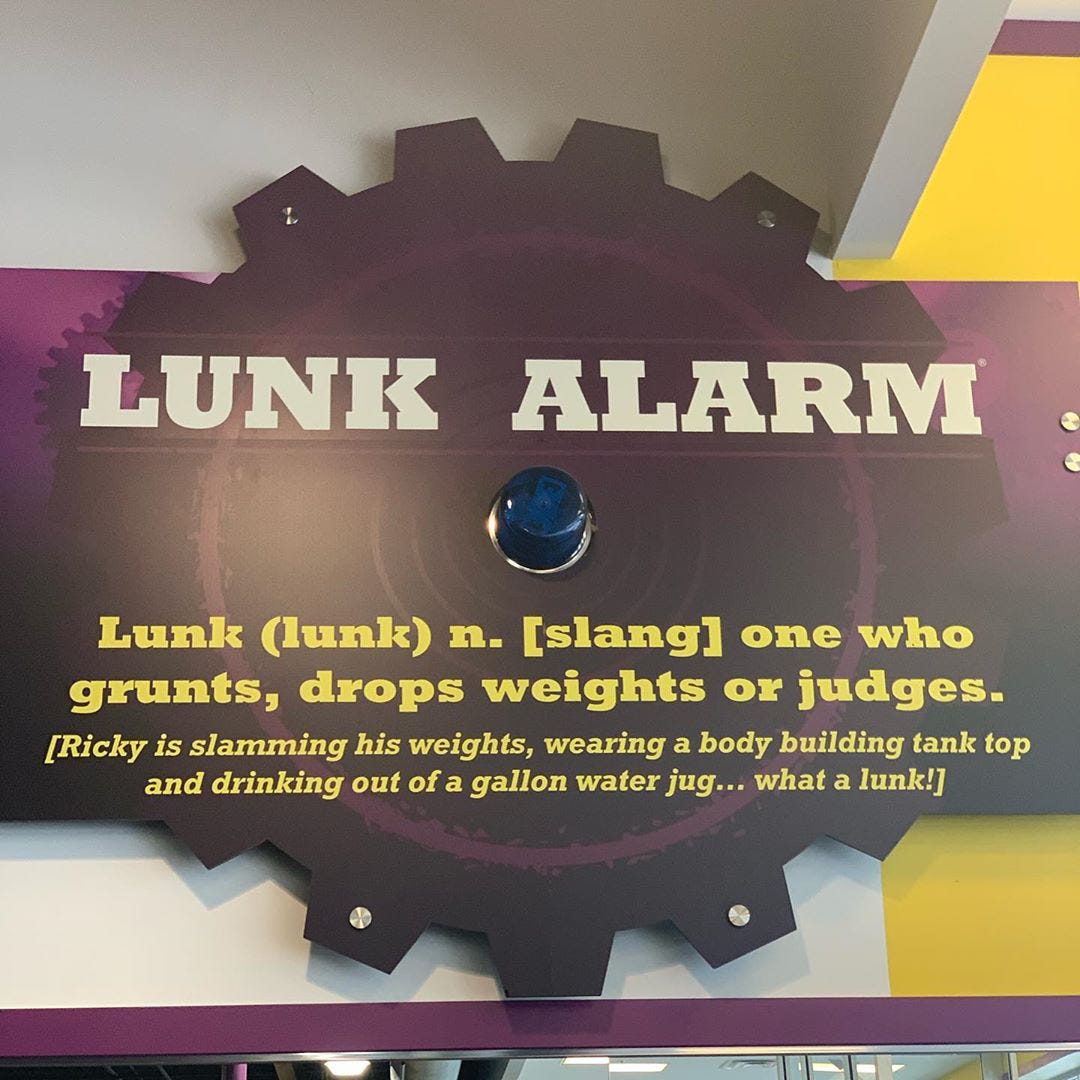
If all you have is a Planet Fatness near you, please use it. Just understand that this “Judgement Free Zone” is actually a treadmill daycare for winemoms and is more accurately described as an “Improvement Free Zone”.
Further Resources
Books:
Starting Strength: Meme book that is great for the academic approach to lifting
Heavy Duty I and Heavy Duty II by Mike Mentzer
TSAC-F Textbook: An excellent singular resource for overall fitness
Social Media Profiles
Learn2Run
Squat University
Phyeasique
Pat MacNamara
Youtube:
Gritty Soldier: military-oriented, but excellent resource for overall fitness
Alexander Bromley: Keeps me updated on “fitness drama” while also going over some training principles and history
InfiniteElgintensity: basically just makes fun of fat libtards
Heavy Duty College: Video essay format of Mike Mentzer’s principles, ran by one of Mike’s disciples
Andrew Huberman: This guy is getting some heat recently for his shilling of horrible products like AG1, but he covers very interesting topics and serves as an excellent primer for more advanced health concepts
Hybrid Calisthenics: This guy was a lolcow on iFunny because he has the reddit “relentless optimism” persona. He’s stronger than 90% of people that make fun of him, and fitter than 99%. He has some really good, beginner friendly advice.
Talon Fitness: kind of slop, kind of awesome niche fitness content. Everything is ranked.
The Barefoot Sprinter: as described, also focuses on important biomechanics
A true chud would never pay for YouTube premium
Great guide to lifting, I wish I had something like this when I was in college. I was 5'11", 155 lbs from like 2016 until 2023. On my first real deployment I had the time, sleep, and food to go crazy hard at the gym with a buddy who'd been a college athlete and had enough decent advice to help me jump to 175 lbs in 6 months, almost all muscle. After deployment I plateaued hard, probably from a mix of not enough food and not pushing sets to failure. End of last year I started watching Jeff Nippard's stuff, and even though he sounds like the physical embodiment of the nerd emoji his focus on pushing to failure helped me rebuild my workout plan. Been on a bulk since summer, currently at 183, looking to get to 190 then cut to 185. Definitely doesn't hurt that my wife cooks for me now and so I get to bulk on homemade meals all the time. Haven't gotten into the rucking side yet but my cut should coincide with the start of spring and be the perfect opportunity to storm past the crackheads at 5 AM